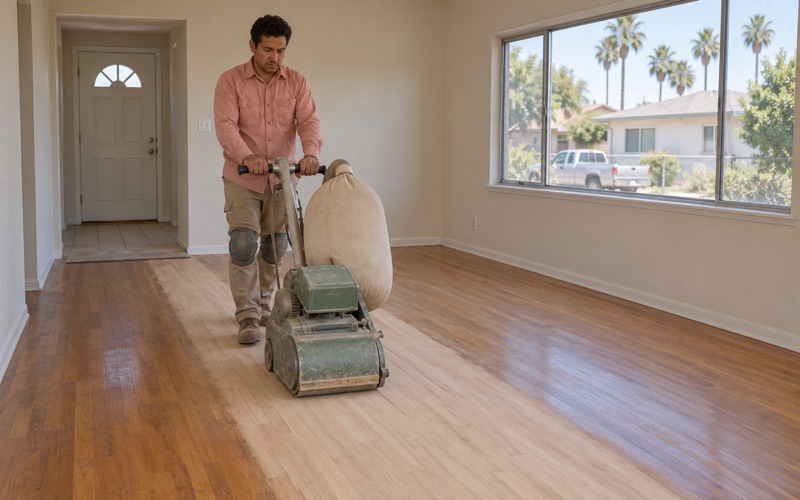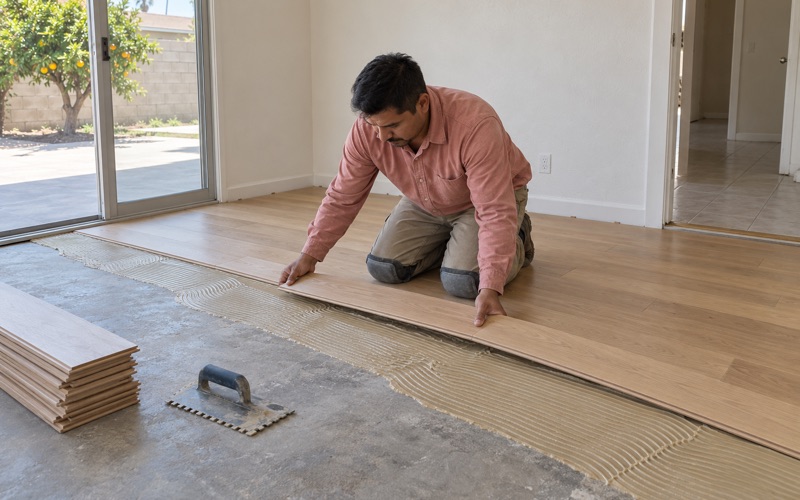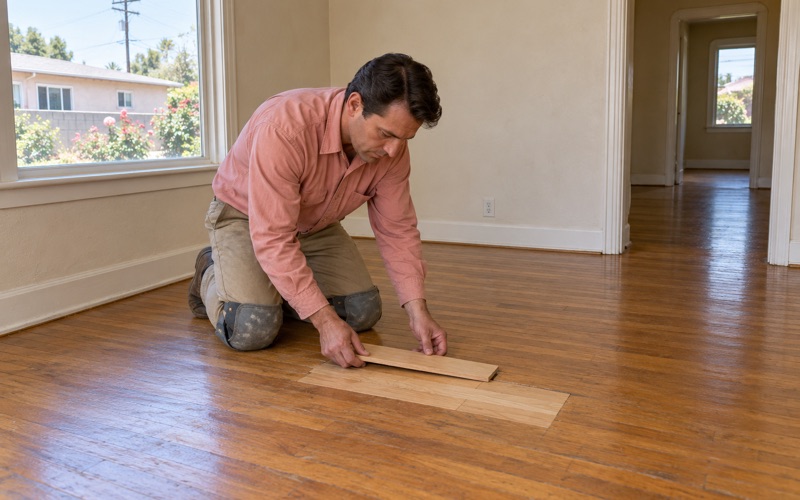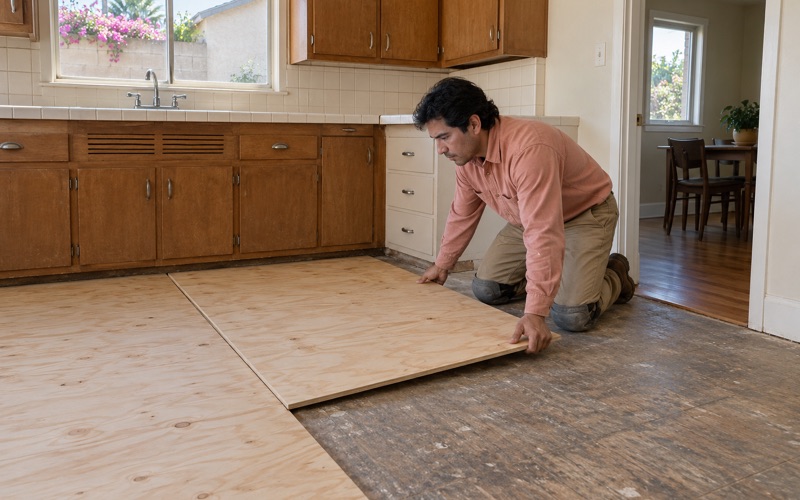
Compton Wood Flooring takes on wood-flooring in Westmont mostly for the people who own apartment buildings, and more than 20 years of floor work have taught us that a rental floor is judged on a longer clock than a homeowner’s. An owner replacing a worn unit floor wants to know how many turnovers it will survive, what the invoice will show, and whether the job is written up well enough to support an application they may later decide to file.
That is the lens we bring to every quote here. We look at the floor that is already down, measure moisture before anything is ordered, and price the work in a way that keeps repair separate from improvement. A board replacement after a leak and a new floor across a whole unit are different kinds of spending, and our paperwork treats them differently from the first page.
We never tell an owner what the County will approve. Those questions are decided case by case by the Department of Consumer and Business Affairs, known as DCBA. Our part is narrower and more practical: install a floor that lasts, and leave records clear enough that the owner, the tenants and the County are all reading the same facts about what was done.
An Apartment Market Built Mostly Before 1990
Who Rents and Where
Census figures put Westmont’s rental share in plain view. Of 10,329 occupied units, 7,405, or 71.7 percent, are renter-occupied, and 4,633 of those renter households, 62.6 percent, live in buildings of two or more units. The largest group among them, 1,587 households, rents in three-or-four-unit buildings, followed by 1,081 households in buildings of five to nine units.
Many of those tenants have stayed put. The American Community Survey counts 4,257 renter households that moved in between 2010 and 2019, so a large share of units have held the same household for years. A floor in one of those units may not come up for replacement until the tenant leaves, or until wear forces the question while the tenant is still living there.
The Age of the Buildings
Of Westmont’s 10,954 housing units, 89.1 percent were built before 1990, and more than half went up before 1960. That matters in two ways. Floors in these buildings have usually been re-covered more than once, and the construction date is part of what decides which County rules apply to a property, a question the owner settles with the County rather than with us.
The County’s Rent Stabilization and Tenant Protections Ordinance, Chapter 8.52 of the County Code, fully covers rental properties in unincorporated areas with two or more rental units and a certificate of occupancy issued on or before February 1, 1995. Given the build dates, much of the apartment stock here plausibly falls under it. Coverage is still decided property by property, and we never assume it for a particular building.
Looking for wood-flooring closer to Cudahy? See Wood-Flooring Services in Cudahy.
When New Flooring Counts as a Capital Improvement
Approval Comes Before Any Pass-Through
Under the RSTPO, a landlord may pass through up to 50 percent of certain costs for work performed on the property, but only after an application is submitted to DCBA and approved. The DCBA Notice of Tenant Rights, revised in May 2022, states that sequence plainly. Installing a floor starts nothing on its own; any pass-through follows the County’s review, if the County grants one.
That approval step shapes how we write up a job. An owner who might apply needs to show what was done, where, when and at what cost, and a vague line reading flooring work, two units leaves too much to interpretation. We cannot promise any result, but we can make sure the documents describe the floor exactly as it was installed.
One 2019 Case and Its Arithmetic
A DCBA staff report from December 2019 shows how the County has looked at flooring in at least one case. It involved a four-unit property built in 1955 in unincorporated East Los Angeles, heard under the Interim Rent Stabilization Ordinance that preceded the RSTPO. Among the improvements staff found substantiated was a vinyl plank flooring installation totaling $3,986.80.
For that flooring improvement, DCBA staff recommended an amortization period of seven years, or 84 months. The cost was divided among the three affected units and spread across those months, which came to $15.82 per affected unit each month. An air conditioner in the same case was given ten years, a reminder that staff weighed each improvement on its own terms.
That report is one recommendation in one case, not a published schedule. Staff in the same case also advised that rent increases plus pass-throughs should not exceed 10 percent of the base rent. We share it because it frames a useful question for any owner: will the floor still be in good shape well after its cost has been spread out over the years?
What Goes Into the Paperwork
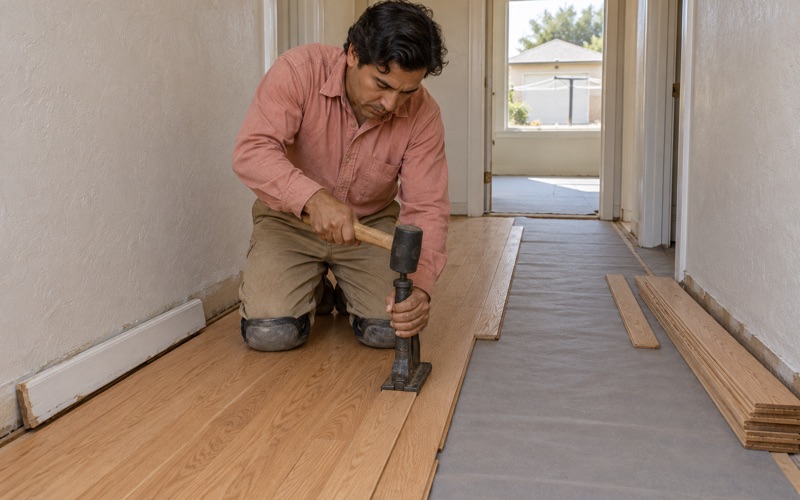
Our written scope names each unit and room, the square footage, the species or product, the installation method and the finish. Invoices separate labor from material and list the dates the work was performed. When we open a floor and find damaged subfloor or signs of a leak, we photograph it and log moisture readings, so repair and improvement stay distinguishable on paper.
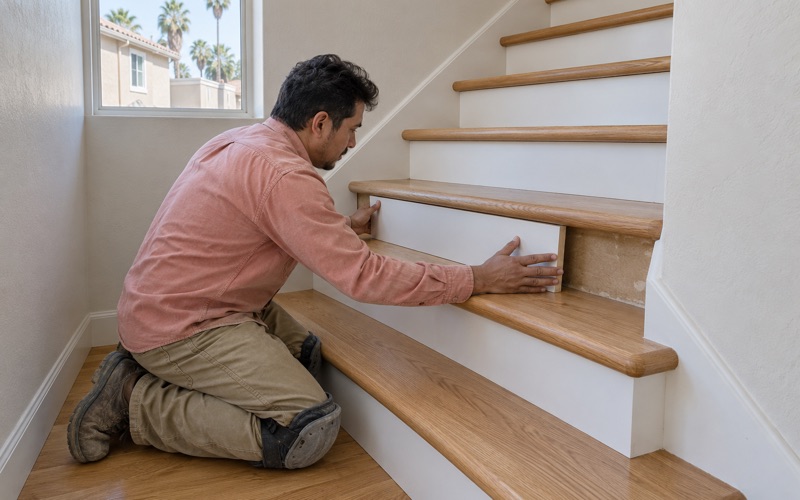
Owners sometimes ask us to break out a shared hallway or common stair from the unit work, since those areas serve every tenant rather than one. We are glad to split the invoice that way. Stairs are priced per tread and riser rather than folded into a square-foot figure, which keeps that separation clean when a building’s shared stairway gets new treads and nosing.
Choosing a Floor That Outlasts Its Amortization
Hardness and Wear Layer
A rental floor sees more move-ins, move-outs and furniture drags than most owner-occupied floors. We compare the Janka hardness rating of red oak, white oak and hickory against the budget, because a harder species keeps its surface longer under chair legs and hand trucks. The aim is a floor that still looks presentable at the second or third turnover, not only the first.
For engineered flooring, wear layer thickness is the number we point owners to first. A thin wear layer may never take a full sanding, so the floor’s useful life ends when that surface wears through. A thicker wear layer, or solid hardwood, can be sanded and refinished later, which can stretch the working life of the floor well beyond the first round of wear.
Finishes That Can Be Renewed
Between tenants, a screen and recoat can refresh a site-finished floor in a day or two without sanding to bare wood, as long as the finish has not worn through. We record the finish product and sheen on the invoice so the next recoat matches. Every coating we apply is legal in the South Coast air basin under SCAQMD Rule 1113 and its 275 g/L wood-coating limit.
Satin sheens hide the scuffs of a move-out better than gloss, and waterborne polyurethane dries quickly enough to fit a short vacancy. Where an owner prefers an oil-modified polyurethane for its build and warmer color, we plan around the longer cure. Either way, the finish choice goes into the written scope, so it becomes part of the record.
What the Old Floor Hides
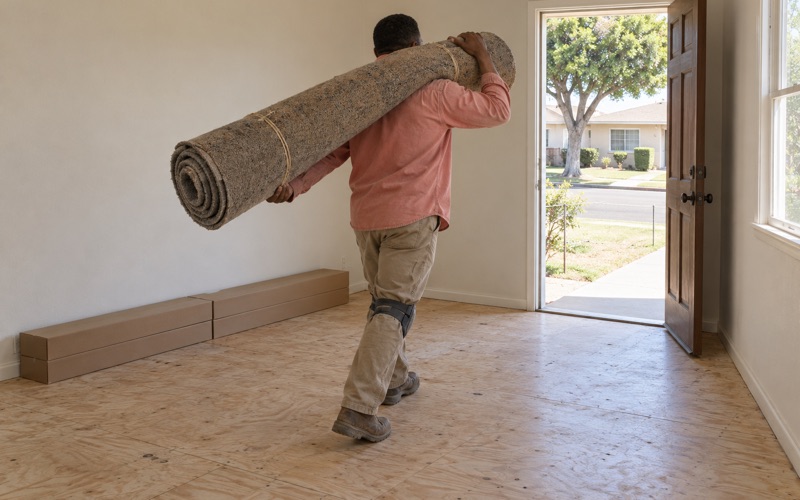
With nearly nine in ten units built before 1990, the floor we uncover is rarely the first one laid. We expect layers: carpet over linoleum, 9x9 tile over boards, or plywood underlayment from an earlier remodel. Any original floor found under those layers is assessed board by board before we quote a full replacement, since saving sound wood can be the longer-lasting choice.
Old tile and black mastic are treated as a possible asbestos question before anything is scraped or sanded, with an asbestos survey first where the materials call for one. Nearly four in five Westmont housing units were built before 1980, so we plan for pre-1978 construction and follow lead-safe practices under the EPA Renovation, Repair and Painting rule. Both steps protect neighboring tenants as much as our crew.
Working Around Tenants Who Stay in Place
One Unit at a Time
Much of our Westmont work happens in occupied buildings, and sometimes in occupied units. We schedule replacement one unit at a time so the rest of the building runs normally, and we keep to access times the owner has given tenants in advance. Hallway and stair work is staged so every door keeps a clear path to the street while the job is underway.
When the work reaches a unit that is still lived in, we finish one room at a time and let the coating cure before furniture goes back. Displacement carries its own obligations: the Notice of Tenant Rights says landlords may be required to provide relocation assistance for certain temporary displacements under Section 8.52.110. We plan jobs to keep tenants in their homes wherever the work allows.
Dust, Odor and Moisture
In a building with shared walls and a common stairwell, dust travels. A dustless sanding system on the drum sander, edger and orbital sander keeps most of it contained, and doorways are sealed with plastic before sanding starts. We tell the owner in advance which days will be loudest, and waterborne finishes keep odor lower in the units next door.
Before material arrives, we check moisture content in the existing wood with a wood moisture meter. Wherever a unit sits on concrete, we run an ASTM F2170 in-situ relative humidity test or a calcium chloride test. New boards acclimate in the unit following NWFA installation guidelines, and every reading is written down, which adds one more dated page to the owner’s file.
Repairs Are Not Upgrades
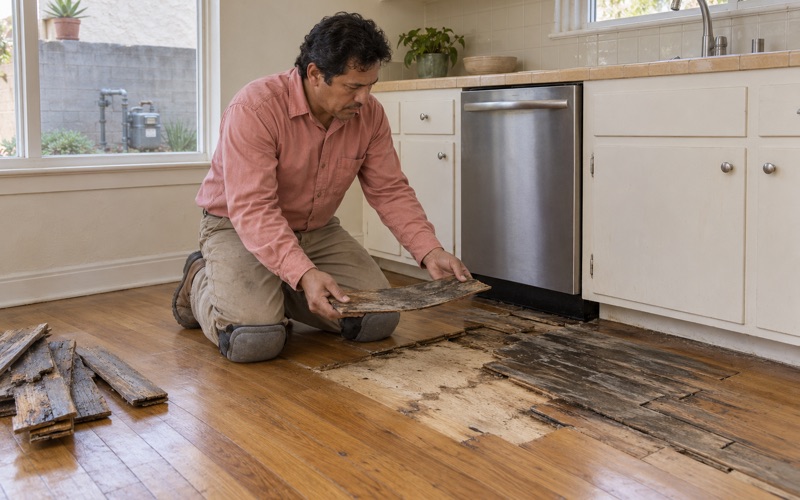
Some floor calls are not improvements at all. A soft spot, a lifted board or a water-stained patch can become a habitability issue, and the Notice of Tenant Rights lets tenants apply for a rent adjustment when a landlord fails to maintain a habitable premise. We trace that damage to its source, fix it, and describe it on the invoice as a repair.
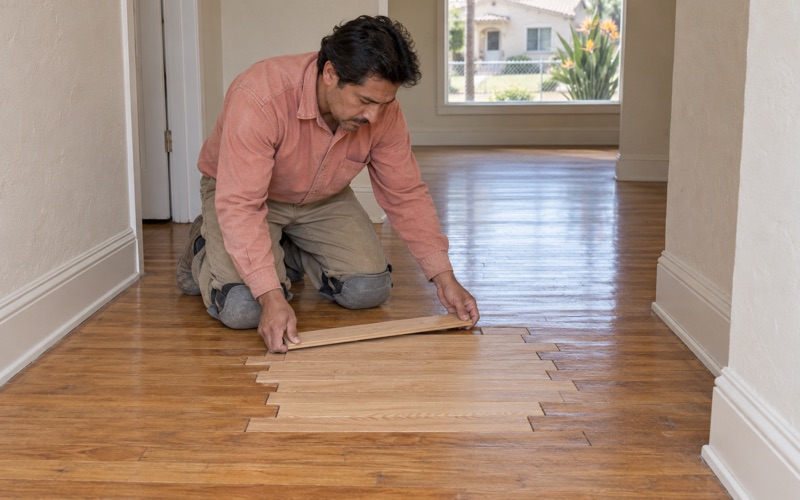
Sloping or bouncy floors are traced to the subfloor and framing before a finish floor is priced, and a sagging joist gets sistered first. Old floor furnace openings are closed with framing and woven-in boards rather than covered by a plywood square. A floor laid over a sound base is the one that lasts through the years an owner is counting on.
Westmont is an unincorporated community of 1.847 square miles just east of Inglewood, reported by the County with West Athens as Athens-Westmont in Supervisorial District 2. Its name comes from its position west of Vermont Avenue. The owners who keep its apartment buildings running need floors that hold up and records that explain them, and we write every job here with both in mind.
- 20+ Years of Wood Flooring
- Written Scopes and Estimates
- Free Estimates