Compton Wood Flooring handles wood-flooring in Walnut Park for households that are often weighing a floor job against every other repair a long-held house is asking for. After more than 20 years on older homes, we have learned that the floor is rarely the only item on the list. A quote that ignores the rest of that list is not much use to the person paying it.
Some owners are also sorting out which repairs a public program might help with and which ones they will fund themselves. We do not decide eligibility, and we never promise that any grant will cover a floor. What we do is write a scope that separates the floor from the surrounding work, so each piece can be discussed with whoever is paying for it.
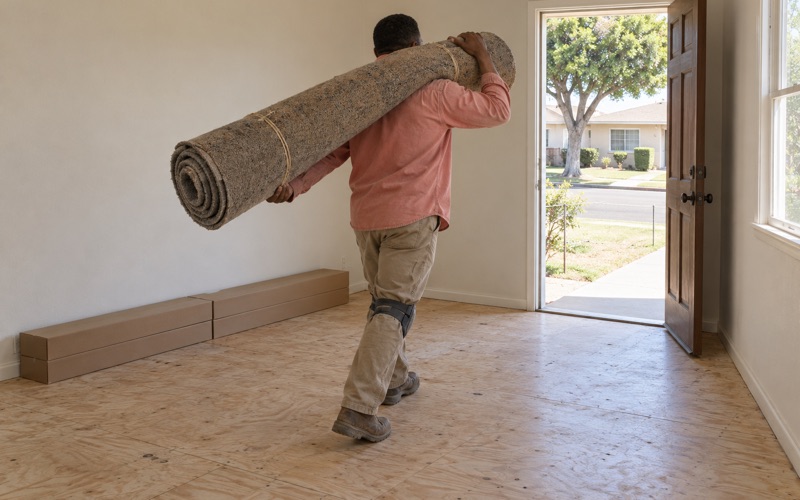
That usually starts with a walk through every room, a look under the carpet or linoleum, and moisture readings written down before anything is ordered. From there, the plan can be staged around the household’s budget, its schedule and the other trades that need to come through first.
County Repair Programs That Reach Walnut Park
Unincorporated and Governed by the County
Walnut Park is an unincorporated community of about 0.75 square miles, directly governed by the County of Los Angeles. It sits in Supervisorial District 4, represented by Janice Hahn. Building questions here run through the County Public Works Southwest Building and Safety Office on Imperial Highway rather than through a city hall.
That structure shapes where home-repair money comes from. Instead of a city housing department, the programs that reach Walnut Park households come through the Los Angeles County Development Authority, known as LACDA. The County CEO’s annual report for fiscal year 2023-24 counts eleven Community Development Block Grant projects serving the community.
The Two Programs Named for Homeowners
Among those eleven projects, the report names a Handyworker Program that provides grants for minor home repairs to eligible low- and moderate-income households. It also names a senior grant program for home modifications. Separately, LACDA describes offering assistance to low-income homeowners who want to rehabilitate their properties.
Those are the County’s own descriptions, and we repeat them as written. Program rules, dollar limits and income tests change from year to year, so an owner considering either one should confirm the current terms with LACDA directly. We are a flooring company, not a program administrator, and we keep our role on that side of the line.
Why the Owner Profile Keeps This Relevant
The owner population explains why these programs come up so often in conversation. Census estimates put 810 of Walnut Park’s 1,906 owner households, or 42.5 percent, under a householder aged 65 or older. That share means a floor estimate here frequently lands on the same kitchen table as a question about senior home-modification help.
Looking for wood-flooring closer to Florence-Graham? See Florence-Graham Wood-Flooring.
What a Minor-Repair Grant Is Built to Cover
Minor Repairs Versus a Whole Floor
A minor-repair program, by its own name, is aimed at smaller, targeted fixes rather than whole-house remodeling. Refinishing or replacing a floor across several rooms is a different scale of job. The honest starting point is that a full floor is usually something the household plans and pays for on its own, and we say so up front.
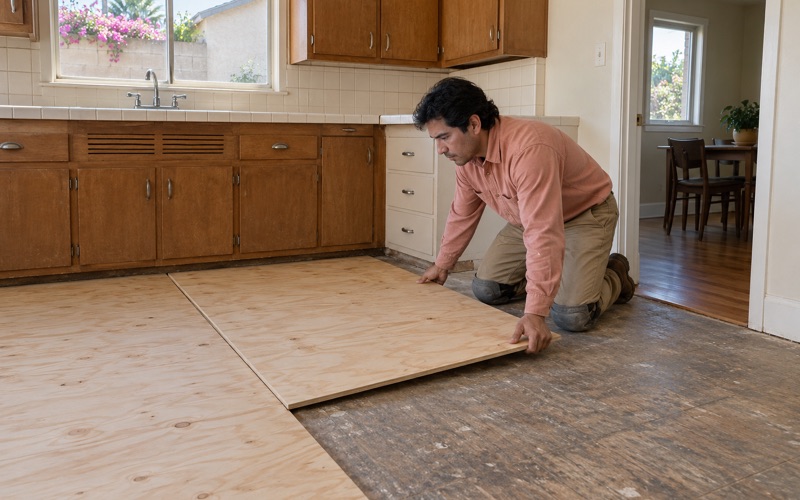
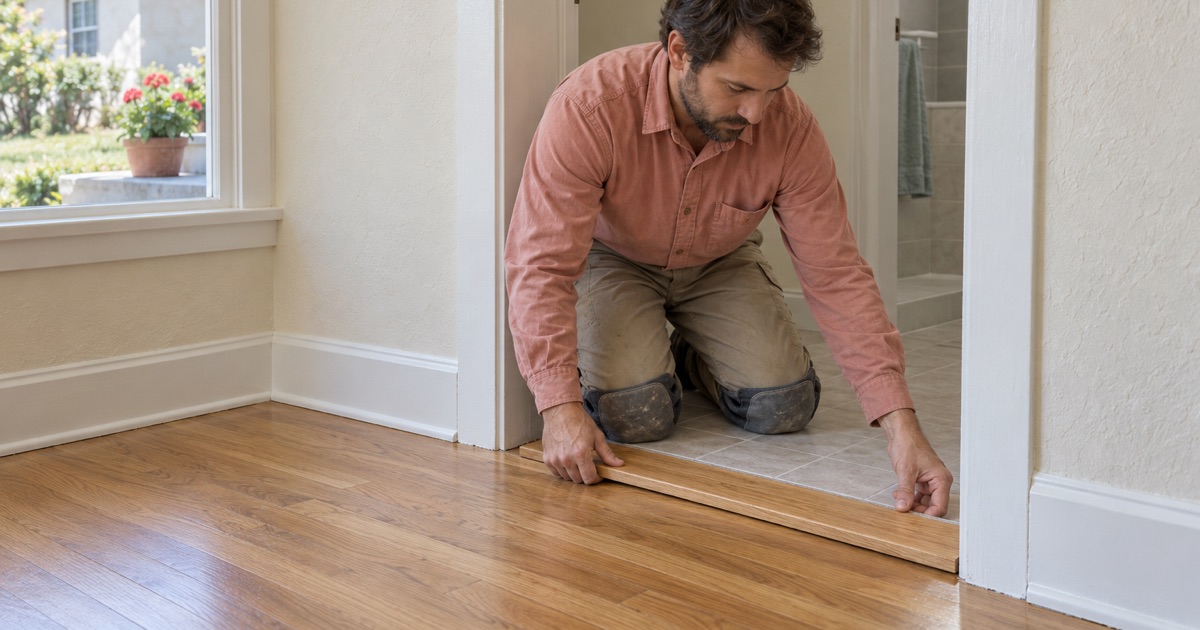
Where the two can meet is in the surrounding repair. A soft spot beside a bathroom, a failed threshold, or a lifted board at a doorway is the kind of item an owner might raise with a program, separate from the finish floor itself. Our written scope keeps those items on their own lines so the conversation with any program stays clear.
Home Modifications and Floor Surfaces
LACDA’s senior grant materials list non-slip floor covering among eligible items. That tells an owner the program treats floor surfaces as a safety matter, but it is not a statement that wood flooring qualifies. We point owners to the program’s own list and let them put the question to LACDA themselves.
What we can offer is information about the surfaces. A satin or matte sheen level on a site-finished floor shows less glare than gloss, and a stair nosing that is firmly fastened feels steadier underfoot than a worn, rounded one. Those are practical choices any owner can weigh, whatever the funding source turns out to be.
What We Put in Writing
For an owner comparing options, we write the estimate so someone other than the homeowner can follow it. Moisture readings, the condition of the existing floor, and each repair appear as separate items. A relative, a caseworker or a program inspector can see exactly what is proposed and why, without trying to decode a single lump sum.
Sequencing a Floor Around the Rest of the House
Old Houses, Old Layers
The housing here is old by nearly any measure. Of Walnut Park’s 3,857 housing units, 2,114 were built in 1939 or earlier, which works out to 54.8 percent of the total. In houses of that age we expect layers: carpet over linoleum, patches from past plumbing work, and floors that may have been sanded more than once.
That age shapes the safety side of the job as well. Houses built before 1978 get lead-safe work practices under the EPA Renovation, Repair and Painting rule before any sanding begins. Old 9x9 tile or black mastic found under a floor is treated as a possible asbestos question, with an asbestos survey considered before anything is scraped or ground.
Which Trade Goes First
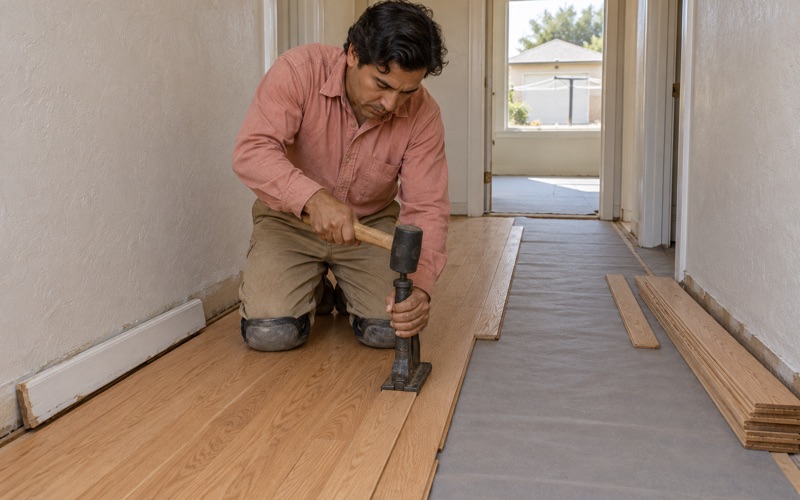
Order matters when several repairs share one house. Plumbing leaks should be fixed and dried out before a floor is touched, because moisture trapped under new boards shows up later as cupping or buckling. Any work that disturbs the floor, such as rerouting a line or replacing a toilet flange, belongs before new wood goes down, not after it.
Painting walls and ceilings usually comes before a sand and finish, since a drip of paint on a fresh floor is harder to fix than a little dust on a wall. Door trimming and baseboard work come near the end, with shoe molding set after the finish has cured. We lay that sequence out in writing so each trade knows its window.
Measuring Before Anything Is Ordered
Before material is ordered, we check the moisture content of the existing wood and subfloor with a wood moisture meter and record the numbers. If any room turns out to sit on concrete, we test that slab too, with a calcium chloride test or an ASTM F2170 in-situ relative humidity test. New boards are given time to acclimate once the readings settle.
These steps can sound slow, but they protect the budget of an owner who cannot afford to redo a floor. Wood installed over a damp subfloor or an unfinished leak becomes the most expensive repair on the list, because it gets paid for twice. Measuring first is how a one-time job stays a one-time job.
Long-Settled Owners and Floors Paid For Directly
Decades in the Same House
Many Walnut Park owners are far from newcomers. Census estimates show 614 owner households moved in during 1989 or earlier, about 32.2 percent of owners, with another 484 arriving in the 1990s. A household that has lived on the same floors for thirty years or more usually knows what it wants to keep and what it wants gone.
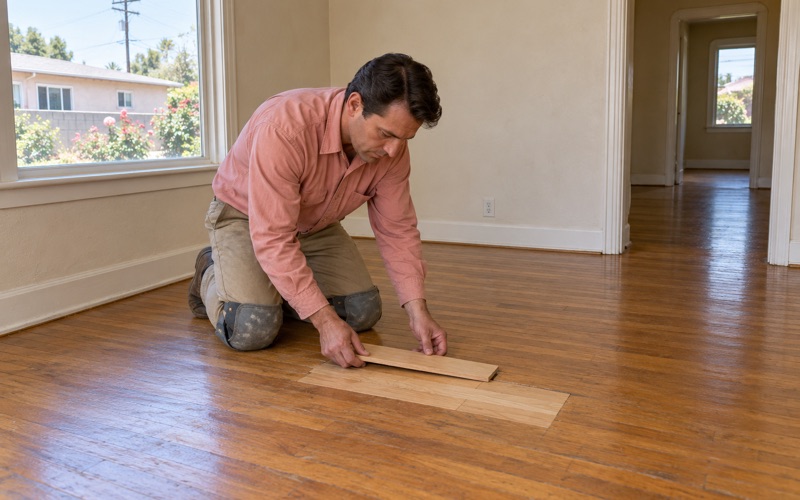
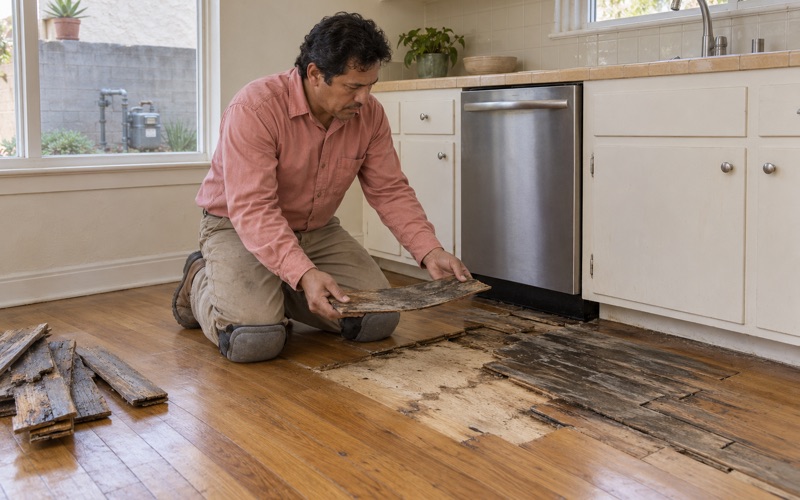
That history helps on the job. Owners often remember when the carpet went down, whether a floor furnace ever sat in the hallway, or which room took water years ago. Any original floor found under carpet or linoleum is assessed board by board, and old furnace openings are closed with framing and woven-in boards, before anyone talks about full replacement.
Owning Outright, Budgeting Carefully
Census figures show 735 of the 1,906 owner-occupied homes, or 38.6 percent, carry no mortgage. For those owners, no lender is part of the decision, and a floor project is paid from savings or income. That is a kind of freedom, but it also means the whole cost lands at once unless the work is planned in stages.
Staging is often the answer. A household might refinish the living room and hall this year and leave the bedrooms for later, or repair damaged boards now and schedule a full sand once other repairs are done. We price each stage on its own and note how later phases tie in, so the stain and sheen still match when the second part is finished.
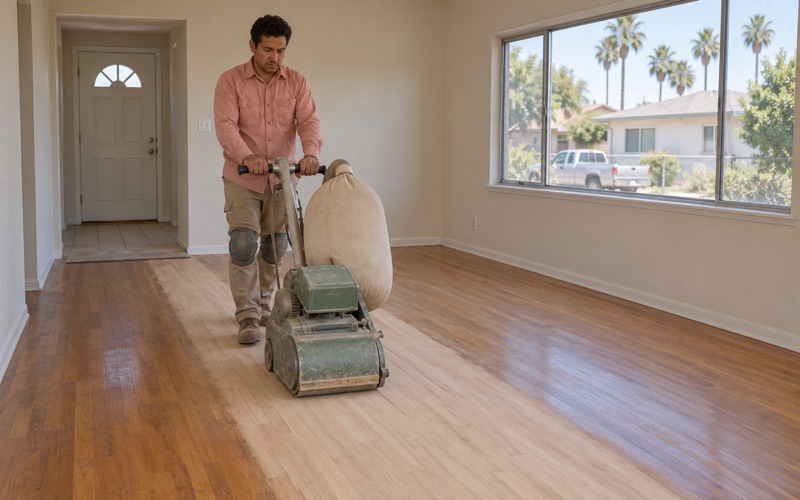
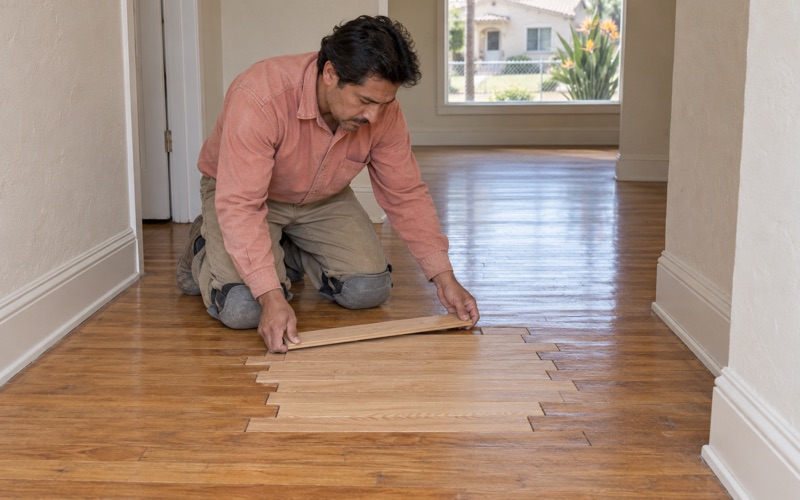
Not every floor needs a full sand. Where the existing finish is sound but dull, a screen and recoat can refresh it with far less disruption. Where boards are split, stained or badly worn, targeted board replacement with a weave-in repair can keep a floor in service for years. We explain which approach fits the floor in front of us rather than steering every job toward replacement.
Materials and Finishes That Suit an Older Home
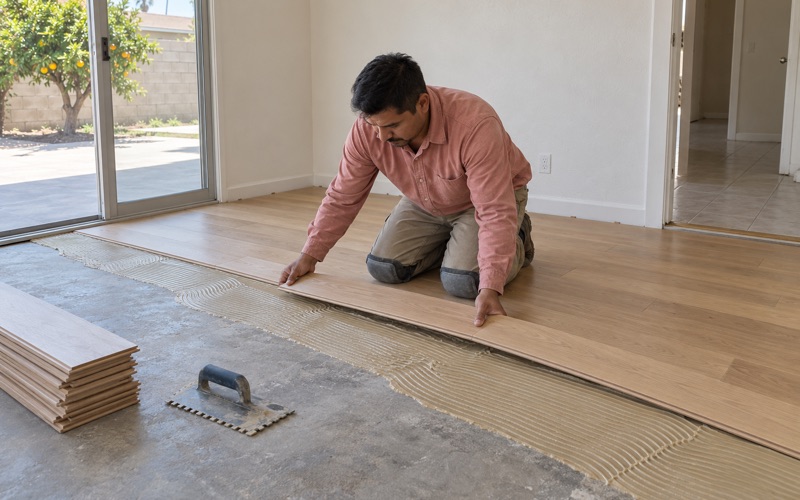
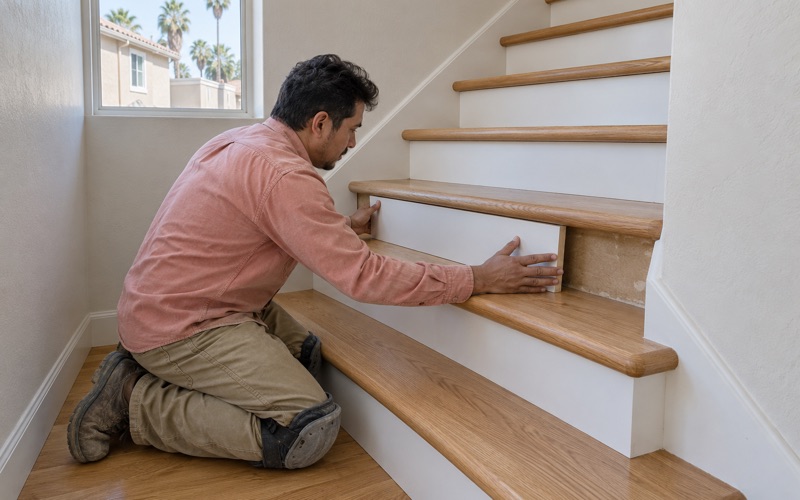
For owners choosing new wood, we talk through hardness and upkeep. Red oak and white oak are familiar choices with well-known Janka hardness ratings, and hickory resists dents better where chairs and walkers move every day. Stairs are priced per tread and riser, which matters in a house where the stair is the one surface that has worn through.
Finish choice follows the air rules. Walnut Park falls within the South Coast Air Quality Management District, so we use finishes that meet the 275 g/L VOC limit for wood coatings under SCAQMD Rule 1113. A waterborne polyurethane dries with less odor and holds a lighter color, which suits owners who stay in the house while the work goes on.
Once the scope is written, the owner has one document showing each room, each repair and each price. That page can sit beside whatever a County program ends up addressing, or stand alone as a job paid entirely out of pocket. Either way, the floor is planned as part of the house rather than as an isolated purchase.
- 20+ Years of Wood Flooring
- Written Scopes and Estimates
- Free Estimates