Compton Wood Flooring approaches wood-flooring in South El Monte with more than 20 years in the trade and one firm habit: we explain what we find before we price anything. That matters here, because homeowners sometimes ask whether a floor project touches the environmental cleanup they have read about. The short answer is that it does not, and the longer answer takes up much of this page.
Our work itself follows the same careful sequence on every visit. We measure moisture in the wood and in any concrete we expose, write the readings down, and only then talk about species, width and finish. Older boards hiding under carpet, linoleum or paint get judged one at a time, so a salvageable floor is never quoted as a tear-out.
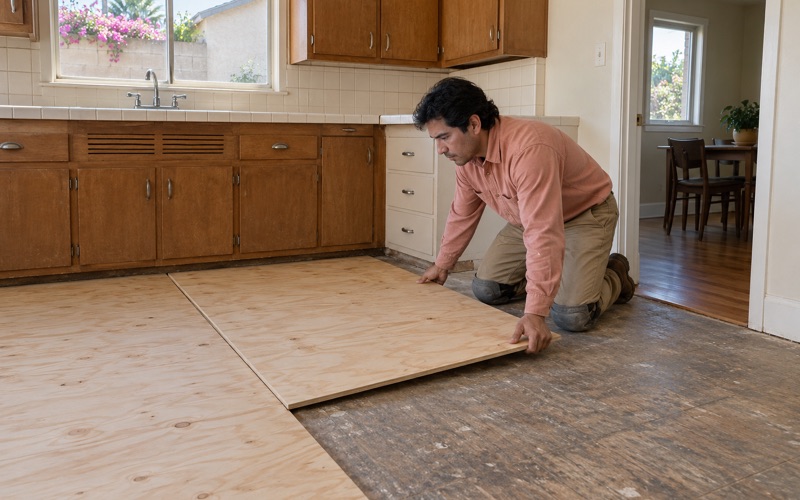
We also trace sagging, springy or soft spots to the subfloor and framing before a finish floor is priced. Stairs are quoted by the tread and the riser rather than folded into square footage, and every scope arrives in writing. Those habits keep the conversation about floors, which is where it belongs even in a city whose groundwater has a long public file.
Wood Flooring in a City That Names a Superfund Cleanup
South El Monte is a city in the San Gabriel Valley of Los Angeles County, and its name appears in the title of a federal cleanup. The U.S. Environmental Protection Agency runs the South El Monte Operable Unit, usually shortened to SEMOU, as one piece of its San Gabriel Valley Area 1 Superfund Site. We think customers deserve a plain account of it rather than silence or alarm.
What the Operable Unit Covers
According to an April 2012 EPA fact sheet, the SEMOU addresses contaminated groundwater under South El Monte, El Monte and Rosemead. It is a groundwater program, which means its subject is water held deep in the ground rather than the houses standing above it. The agency’s broader site profile notes that multiple responsible parties contaminated over 30 square miles of groundwater under the valley with industrial solvents.
EPA traces the problem to decades of poor chemical handling and disposal practices by hundreds of industrial facilities. The primary contaminants are tetrachloroethene and trichloroethene, known as PCE and TCE, and the fact sheet reports that 1,4-dioxane and perchlorate were also detected. None of that is floor chemistry, and nothing a flooring crew does inside a room reaches it or changes it.
How the Cleanup Works
EPA’s ongoing remedy extracts contaminated groundwater and treats it. The agency states that the treated water meets all federal and state health protective standards for drinking water, and its site profile says the drinking water currently provided meets federal and state standards. We repeat those statements as EPA wrote them, because a contractor has no business adding to them or trimming them.
The site profile also lists nine consent decrees for the South El Monte unit, worth over $25 million, that partially fund the interim remedy through a cooperative agreement. In other words, the cleanup is a funded, long-running public program with its own engineers and its own records. A homeowner planning a new hallway floor is simply not a party to it.
Looking for wood-flooring closer to San Marino? See San Marino Wood-Flooring.
Soil Gas Testing and What It Looked For
The 2012 Sampling Round
In 2012, contractors working for EPA collected soil gas samples at various locations in El Monte, Rosemead and South El Monte. The samples came from roughly five to 15 feet down, and each location took about a day. The stated purpose was narrow: to determine whether additional testing was needed to evaluate the potential for vapor intrusion.
EPA’s fact sheet defines vapor intrusion as a process where underground contamination can enter as vapors into buildings. It explains that volatile organic compounds in groundwater can volatilize and migrate upward, so sampling soil gas near the surface shows whether more testing around or inside buildings and homes will be necessary. That is a screening step, and the agency described it as one.
What the Fact Sheet Does Not Say
The 2012 document announces sampling; it does not report a result for any street or any house. We have not read a finding that a particular South El Monte home has a vapor problem, and we will not suggest that one exists. Anyone wanting the current status of the cleanup should ask EPA Region 9, since the agency’s own records are the authority.
We say this plainly because the line between floors and environmental work is easy to blur in a sales pitch. A new floor, a fresh coat of finish or a sheet of underlayment is not an environmental control, and we never present one as a remedy for anything beneath the ground. If soil gas is a real question for your household, the agency running the cleanup is the right place to raise it.
Why We Mention It at All
Silence would be its own kind of spin. Customers here search the city’s name, find the Superfund listing and reasonably wonder whether sanding or tearing out a floor stirs anything up. Our honest answer is that floor work happens inside the house while the cleanup concerns groundwater far below it, and we keep those two subjects separate on every visit.
What This Means for an Ordinary Floor Job
Once the groundwater question is set aside, a floor job here looks like one in any older valley city. Housing counts for South El Monte show 52.6 percent of its homes were built before 1960, and the 1950s alone account for 34.3 percent. That age profile shapes what we expect to uncover beneath carpet and inside the framing.
The House Is the Job
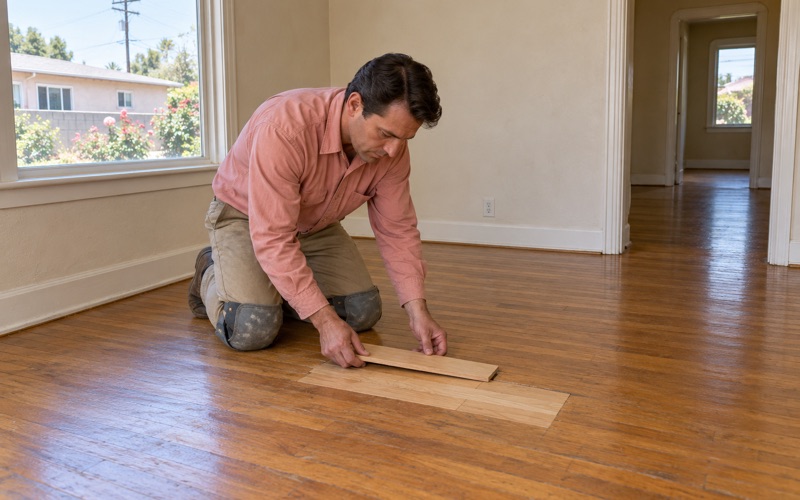
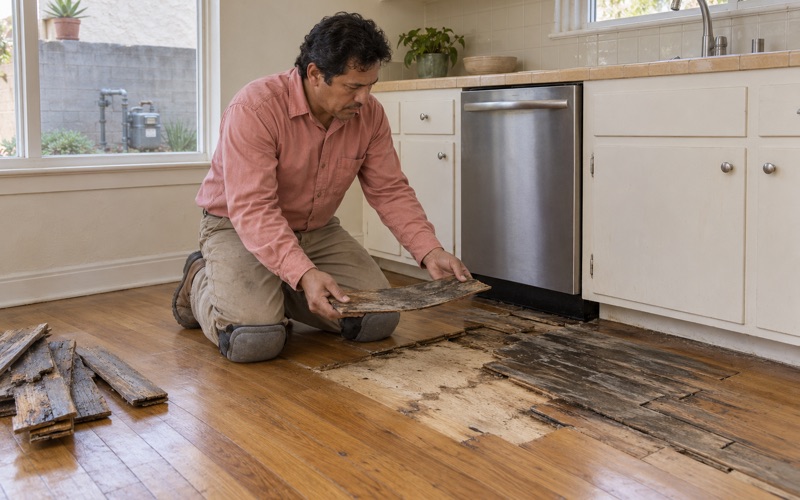
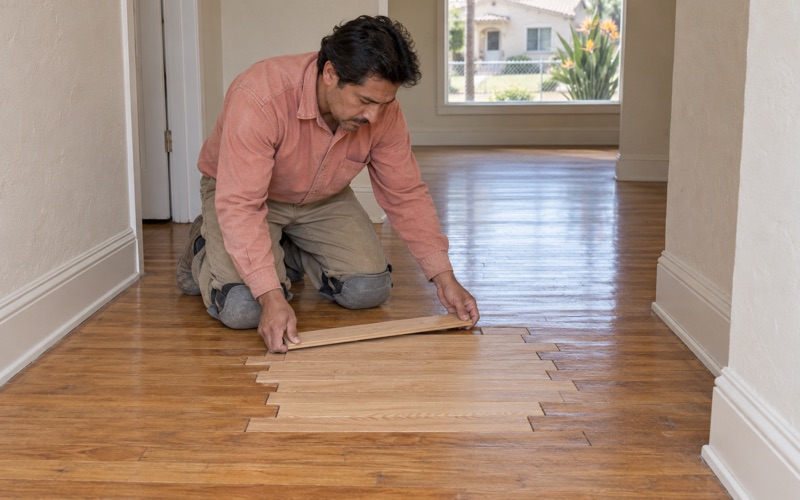
Houses from that era often carry decades of layered decisions: carpet over linoleum, patched boards, old heating openings and finishes applied at different times. We lift a corner, read the boards with a wood moisture meter and check the subfloor before recommending refinishing, a weave-in repair or new material. An old floor furnace opening gets framed and woven closed rather than covered with a plywood square.
Lead Paint and Old Tile Come First
Age matters for reasons that have nothing to do with the SEMOU. With 77.4 percent of the city’s homes built before 1980, we expect many jobs here to involve pre-1978 housing, so we follow the EPA Renovation, Repair and Painting rule whenever painted trim, thresholds or baseboards will be disturbed. Containment, cleanup and verification sit inside the scope, not on top of it.
Old tile and black mastic under a floor get the same caution. A 9x9 tile or dark adhesive can be an asbestos question, so we treat it as one before anything is sanded, scraped or ground, and an asbestos survey comes before demolition when the material looks suspect. These are documented floor hazards, and they sit in the rooms where we actually work.
A Tight Floor, for the Wood’s Sake
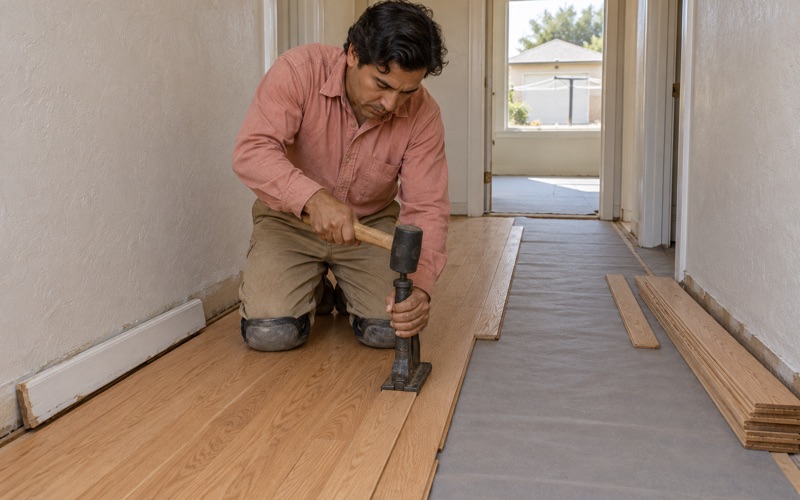
A snug, well-finished floor is good practice for ordinary reasons. Moisture content is measured before installation and material is acclimated, so boards do not cup, crown or open wide gaps a season later. Seams are fitted close, expansion gaps are left at the walls and hidden under shoe molding, and the finish is built to the thickness the product calls for.
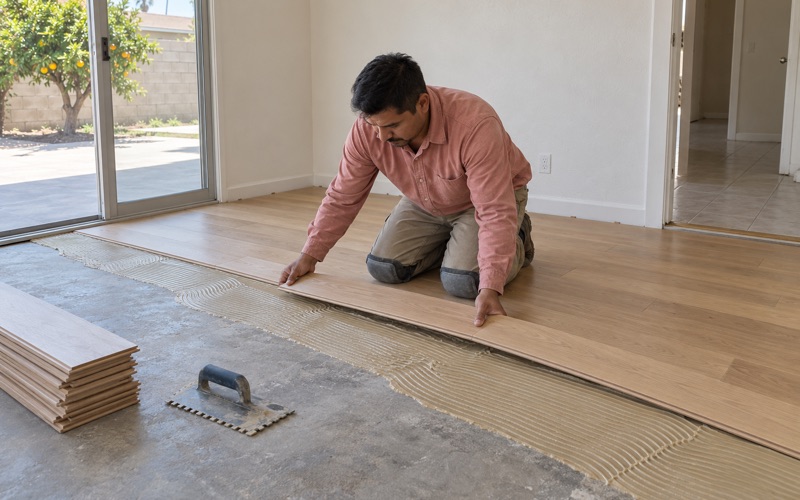
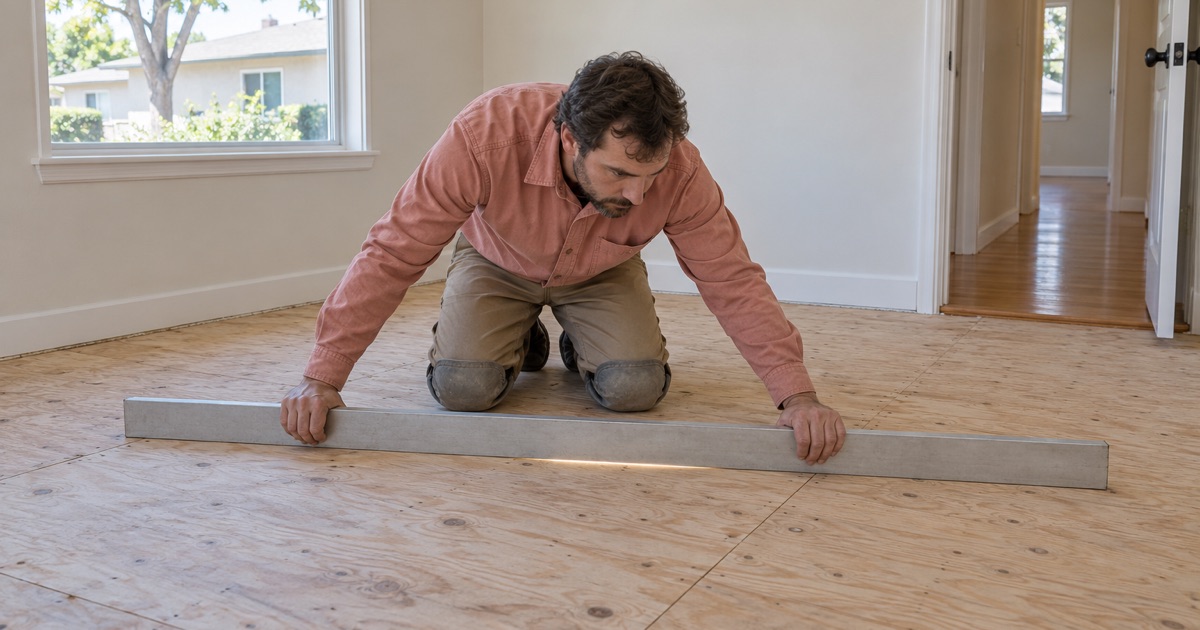
Those steps protect the wood, the finish and your investment, and that is all we claim for them. When a floor goes over concrete, we test it with a calcium chloride test or an ASTM F2170 in-situ relative humidity test and record the result. Moisture is what ruins wood floors, and written readings are what let a new one last.
Planning Floor Work in South El Monte
Before the Estimate
Planning starts with a walk-through and a conversation about how the rooms are used. We note where boards dip or bounce, where finish has worn to bare wood and where pets or plants have stained the surface. Then we measure moisture, look at the transitions between rooms and check any stairs, since each of those details changes the price.
The city’s Community Development Department, through its Building & Safety Division, enforces the latest adopted California Building Code along with city ordinances and state and federal laws. What that means for a given project depends on its scope, so we talk the work through with you before it starts rather than guessing. Structural framing repairs deserve that conversation far more than a refinish does.
Finishes That Suit the Air Basin
Finish choice follows air rules as well as taste. We treat South El Monte as part of the South Coast air basin, as its location suggests, and choose wood coatings legal to apply under the SCAQMD Rule 1113 limit of 275 grams per liter. Waterborne polyurethane, oil-modified polyurethane and hardwax oil each have a place, and we explain sheen and wear before you decide.
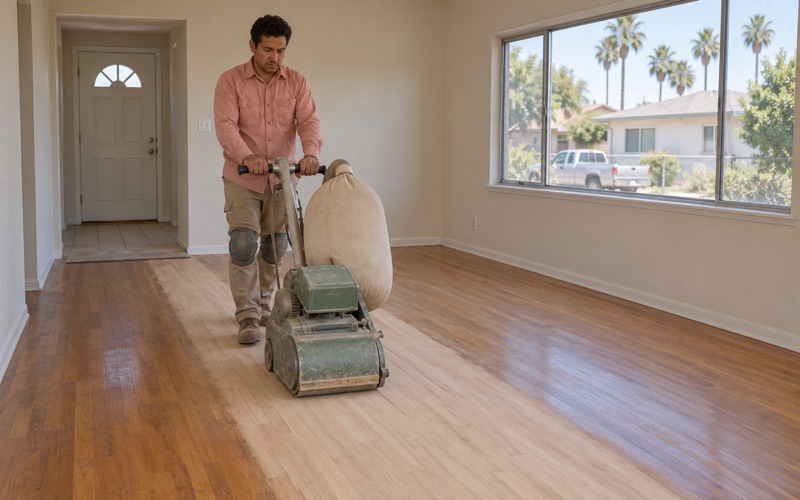
Sanding runs through a planned grit sequence with a dustless sanding system where the floor allows, and we screen and recoat instead of fully sanding when the surface only needs refreshing. Finish goes on in thin, even coats, with drying time respected between them. A rushed coat is how tacky or peeling polyurethane ends up on a brand-new floor.
Stairs, Scopes and Records
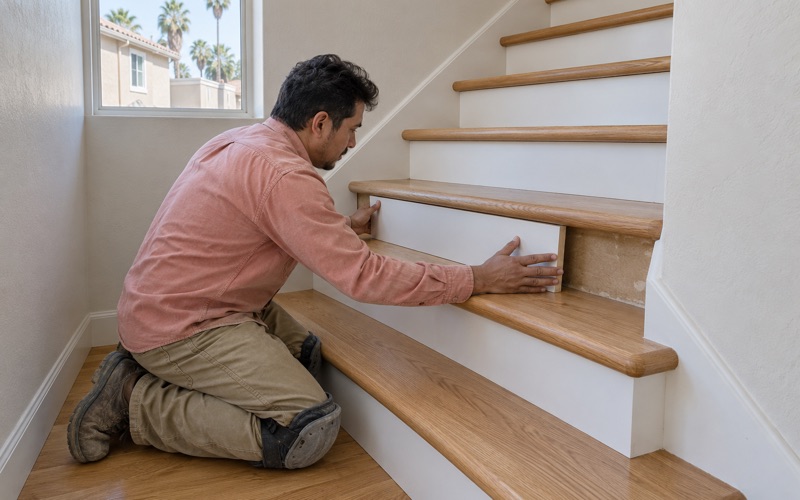
Stairs get their own lines on the estimate. We price each tread and riser separately, note the nosing profile and match stain to the floor they meet. That keeps a staircase from disappearing into a square-foot figure nobody can check afterward, and it makes phasing the stairs into a later visit easy.
Every job ends with paperwork you can use. Scopes and invoices are written clearly enough for a seller to hand to a buyer or a landlord to keep on file, and water-damage work is documented with photos and moisture readings an insurance adjuster can follow. Those records outlast the job, and they belong to you.
If you are weighing a floor project in South El Monte, we start with the house in front of us: its boards, its framing, its moisture and its age. The groundwater cleanup will keep running under EPA’s management whatever we do upstairs, and your floor plan does not need to wait on it. Call us and we will schedule a first look.
- 20+ Years of Wood Flooring
- Written Scopes and Estimates
- Free Estimates