Compton Wood Flooring brings more than 20 years of hands-on work to wood flooring in Lomita, whether the job is a refinish, a repair or a full new floor. Our crew does not quote from the curb or from a photo. We look at the boards, the subfloor and the finish layers first, then write a plan that fits the house in front of us rather than a guess about the street.
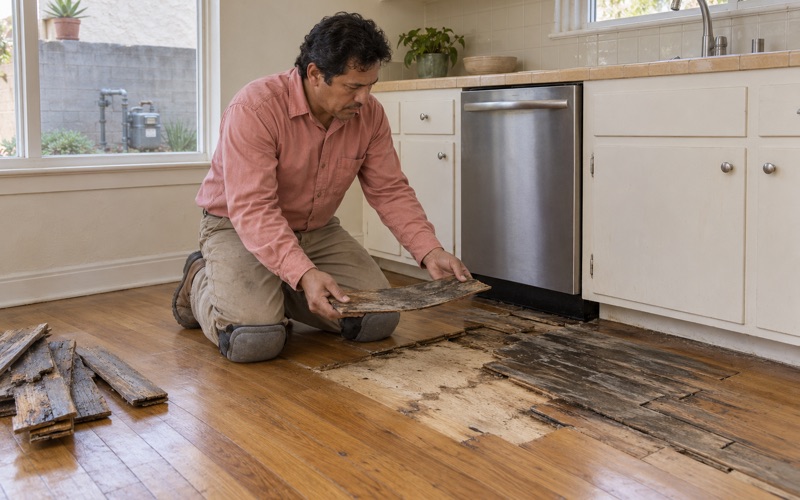
Older houses make up most of what we see. A floor that has spent decades under wall-to-wall carpet may still be sound wood, or it may be a patchwork of repairs by several past owners who each had a different idea of a fix. We lift a corner in a closet, read what is actually there and assess it board by board before anyone mentions a full replacement.
That habit of checking rather than assuming runs through this whole page. Lomita has a layered past, and it is tempting to guess what sits beneath a house from a story about the town. We prefer measurements, photos and written notes, because a floor plan built on evidence holds up far better than one built on local lore or a neighbor’s experience.
From an Oil Boom to Celery Fields to Houses
A Water Well That Found Gas
The City of Lomita’s own history page tells how the town’s first boom began. An early resident named McSwain sank a well looking for water, and the pump on it kept failing. When a lit match was tossed near the discharge pipe, it exploded, and the city’s account says that pocket of natural gas augured an oil boom that would change the face of Lomita forever.
It is a good story, and the city tells it as local history rather than as a geological record. We repeat it here because it explains how the town grew and why its land changed hands so quickly. It is not a reason to worry about any particular house today, and we treat it exactly that way when owners bring it up during a first visit.
Test Wells in 1923
According to the same history, Eaton sank a couple of test oil wells in 1923 on local land owned by Albert G. Sepulveda and proceeded to strike it rich. Property values climbed fast after that. Lots that had first been bought for $300 to $400 sold for as much as $35,000, a jump that reshaped who owned land in the area and what they meant to do with it.
The city’s account adds that about 500 acres of the original Lomita tract was given over to the oil industry. That early tract is not the same map as the 1.912 square miles Lomita covers today, so the figure describes the old townsite and its surroundings, not a share of current city limits or of any one street. We keep that distinction clear whenever the subject comes up.
The Celery Capital Years
After the boom and bust of the 1920s, the town crept into the 1930s and picked up a new reputation as the Celery Capital of the World. The city’s history says truck farming of vegetables, fruits and eggs became the prevailing occupation of residents during that decade. In a few short years, the local identity had shifted from drilling for oil to growing food.
Houses followed the farms. Census counts show 1,600 housing units built in the 1950s, 1,576 in the 1960s and 1,763 in the 1970s, the busiest single decade on record for the city. Those three decades together account for well over half of Lomita’s housing, and ground that was drilled and then farmed now carries the homes most of our work here involves.
Looking for wood-flooring closer to Santa Fe Springs? See Wood-Flooring in Santa Fe Springs.
What the Ground History Does and Doesn’t Tell You
A Story, Not a Survey
A town history is a record of events, people and prices. It does not map where early wells stood relative to today’s lots, and we have not read any inventory that would. For that reason we never tell a homeowner what lies beneath their house based on the oil years, and we never suggest the boom explains a problem they are seeing in their floor.
What the history does tell us is that this land changed hands and uses more than once before most of its houses went up. It was leased, farmed, subdivided and built on over several decades. That layering is a useful reminder that the ground under a home and the framing above it both deserve a direct look rather than an assumption carried over from a story.
Why the House in Front of Us Matters More
Census figures show 78.9 percent of Lomita’s housing units were built before 1980, and 36.6 percent before 1960. Those numbers tell us most of the floors we meet have been walked on for decades. They do not tell us how any single house was framed, what its subfloor is made of or what later owners chose to lay on top of the first floor.
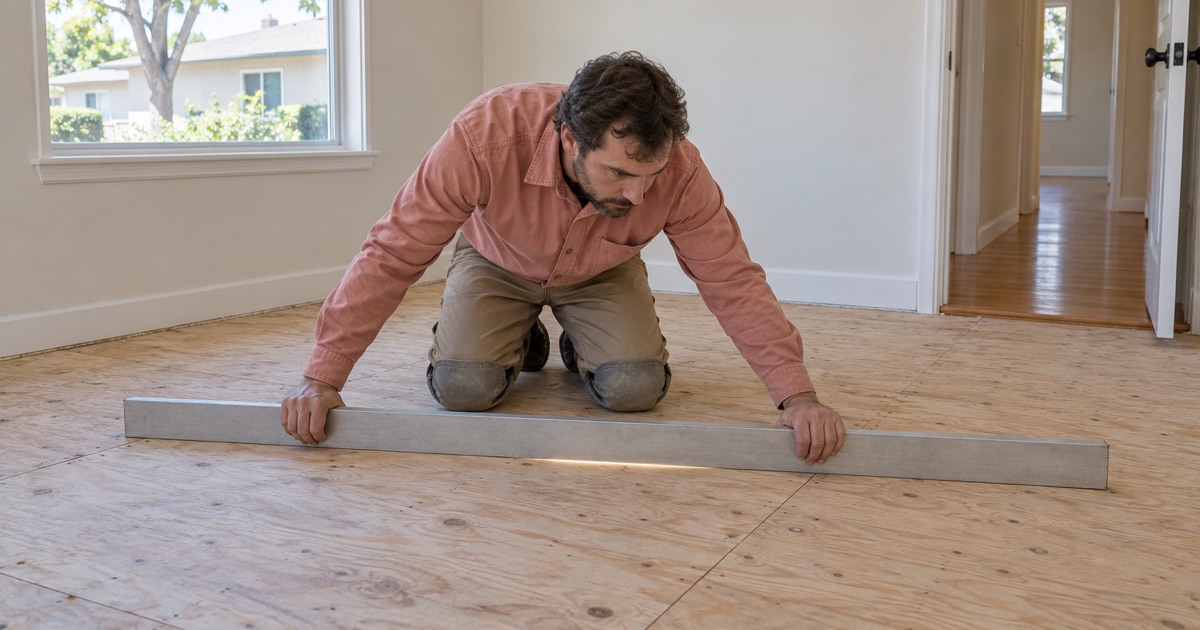
So we check. We look at the floor surface, the transitions and the height at each doorway, and where we can reach it, the structure underneath. A floor that squeaks, dips or feels soft has a physical cause somewhere in the framing, the subfloor or the moisture picture, and finding that cause is what lets us set a fair price instead of padding one.
Housing type varies as well. Of the city’s 7,904 housing units, 3,965 are one-unit detached houses, and the rest range from attached units to buildings with fifty or more. A detached house and a unit in a larger building raise different questions about access, neighbors and shared structure, so our first visit sorts out which situation we are working in.
Assessing an Older Lomita Floor Before Work Starts
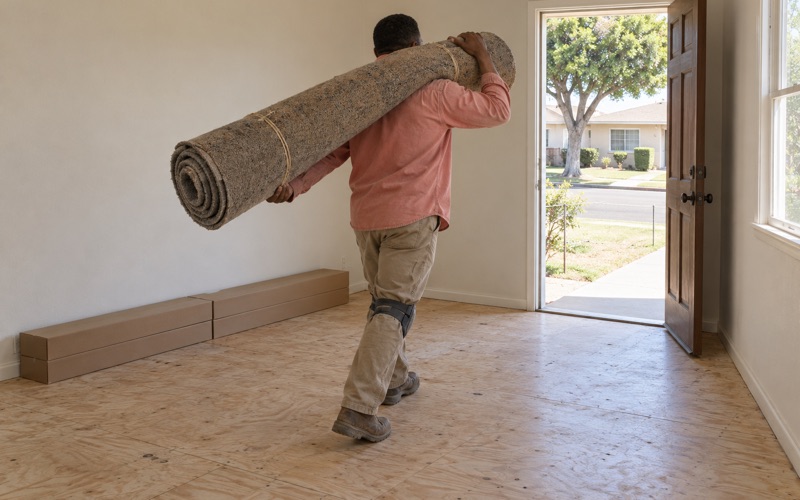
What Hides Under Carpet and Linoleum
Carpet, linoleum and paint are the usual layers we find on older floors. We pull a small section at a threshold or inside a closet to identify the species and profile from a real board, check how much wood sits above the tongue and look for past patches. Only then do we say whether sanding, a screen and recoat or replacement makes the most sense.
We do not guess a species from the age of the house. Oak strip flooring, Douglas fir flooring and later additions can all turn up in homes of the same era, sometimes side by side in different rooms. A reading of the actual boards keeps the stain plan, the repair stock and the price tied to what is really there, not to what a house of that age usually holds.
Moisture Measured and Written Down
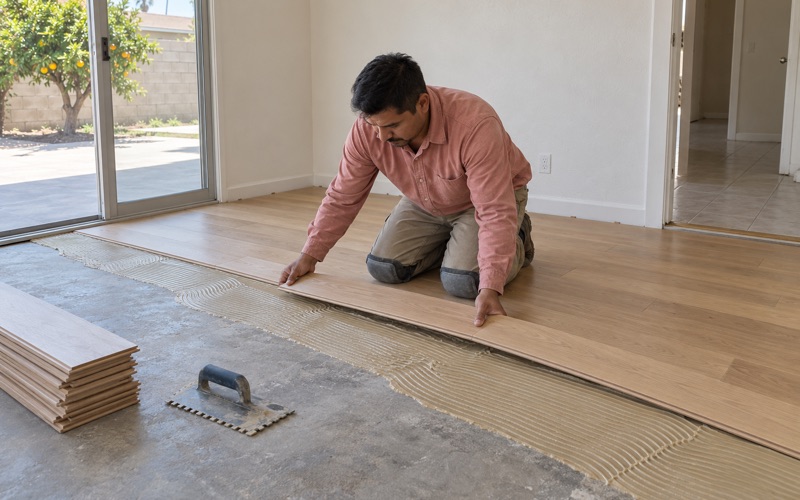
Before we order any material, a wood moisture meter goes on the existing floor and on the new stock. Where a job sits over concrete, we test the slab with an ASTM F2170 in-situ relative humidity probe or a calcium chloride moisture test. Every reading is written down, and new boards acclimate until their moisture content is close to the floor they will join.
Lomita’s internal point resolves to National Weather Service forecast zone CAZ366, Los Angeles County Beaches, a zone it shares with neighboring areas. Humidity shifts through the year, and wood answers with cupping, crowning or board gaps when conditions change. Recorded readings let us compare one visit with the next rather than trusting a single afternoon to tell the whole story.
Framing, Slopes and Old Furnace Openings
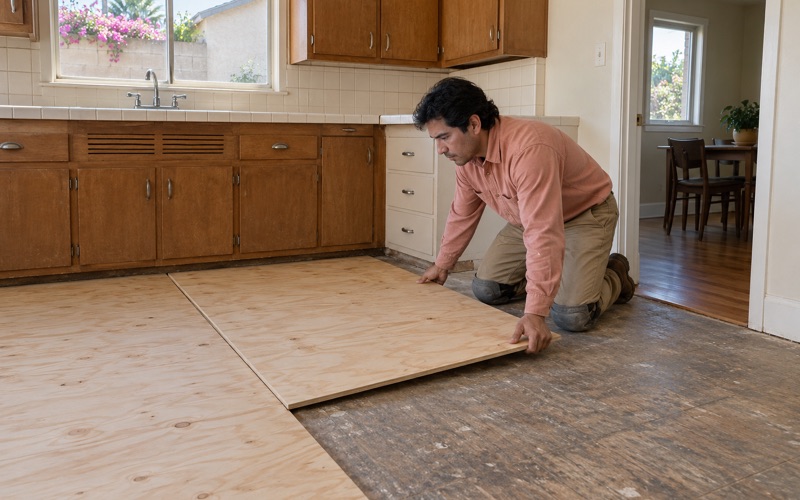
Sloping, bouncy or soft spots get traced before a finish floor is priced. A sagging joist, a failed subfloor patch or long-term moisture can each produce the same symptom underfoot, and each needs a different fix, from joist sistering to replacing a section of plywood subfloor. We write down what we find so the repair plan rests on evidence the owner can see.
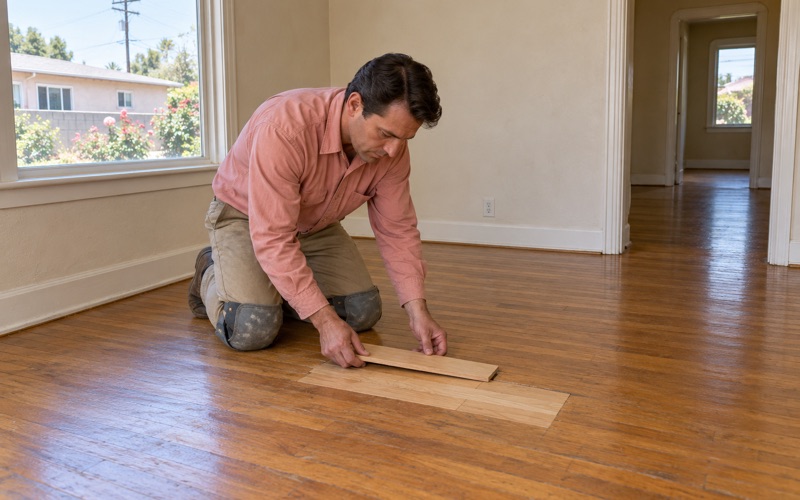
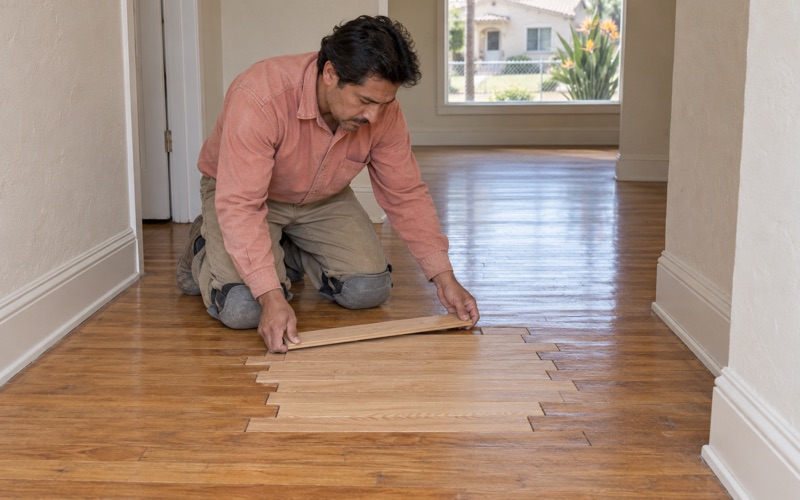
Some older houses once had a floor furnace, and later owners often covered the hole with a plywood square and a rug once the heater came out. We frame those openings properly and weave matching boards into the surrounding field so the repair runs with the grain. The same weave-in repair method handles pet urine stains, split boards and old plumbing cut-outs.
Planning Floor Work in Lomita
Lead and Old Tile Come First
With most of the city’s housing built before 1980, lead is a working assumption on older jobs. For pre-1978 housing we follow lead-safe practices under the EPA Renovation, Repair and Painting rule, containing dust from painted baseboards, shoe molding and thresholds before any sanding starts. Painted floors and painted borders get the same careful treatment until they are handled properly.
Old 9x9 tile and black mastic show up under floors of this age as well. We treat them as a possible asbestos question before anything is sanded or scraped, and an asbestos survey comes first when the materials look suspect. SCAQMD Rule 1403 governs how that kind of material is handled in this region, and we build the schedule around it rather than rushing past it.
Finishes and Sanding
Finish choice is limited to products legal to apply in the South Coast air basin, where SCAQMD Rule 1113 sets a 275 g/L VOC limit for wood coatings. Within that limit, waterborne polyurethane, oil-modified polyurethane and hardwax oil finishes each have a place, and sheen level changes how a room reads. We show owners samples on their own boards before choosing.
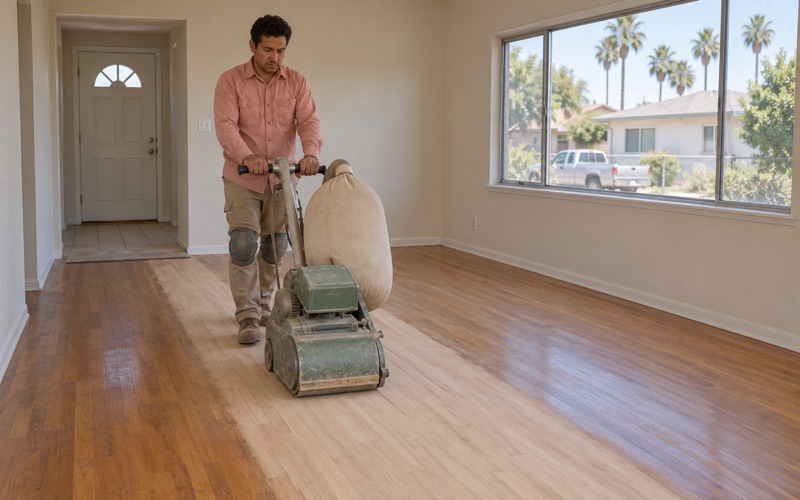
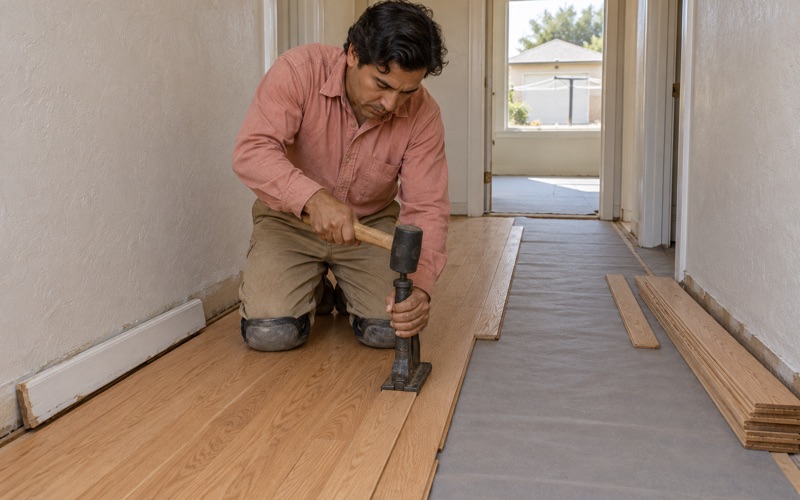
Older boards have often been sanded before, so the grit sequence follows the wood that remains rather than a fixed schedule. A dustless sanding system keeps the house cleaner, and careful edger work protects thin areas near walls and doorways. When new wood meets old, site-finished hardwood lets both be sanded and stained together for a closer match across the room.
Permits, Stairs and Paperwork
Plan check, permits and inspections within Lomita city limits are handled by Los Angeles County Public Works Building and Safety under contract, from the Lomita-Lennox office at 24320 S. Narbonne Ave. When a floor job opens framing or touches plumbing, we raise that office early so the owner hears about it before work begins, not halfway through.
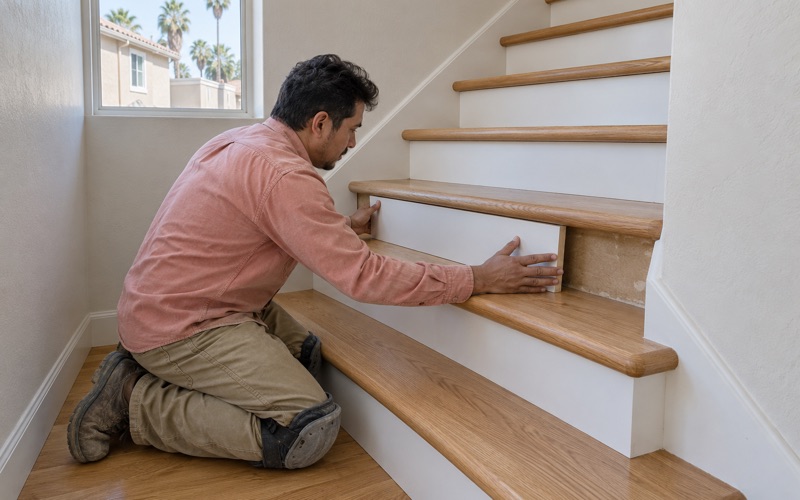
Stairs are priced per tread and riser instead of being folded into a square-foot number, because worn nosings and old repairs take hand work an open room does not. Every estimate lists what we found and what we plan, room by room. Landlords can use that paper at move-out, and owners can keep it with the house records for the next buyer.
- 20+ Years of Wood Flooring
- Written Scopes and Estimates
- Free Estimates