Compton Wood Flooring handles wood-flooring in Huntington Park for owners of rent-stabilized apartments and courts, and after more than 20 years on older floors we treat a repair request as upkeep rather than a remodel pitch. When a tenant reports a loose board, a soft spot by the kitchen or a finish worn down to bare wood, our job is to scope the fix, do it promptly and hand back paperwork that reads cleanly.
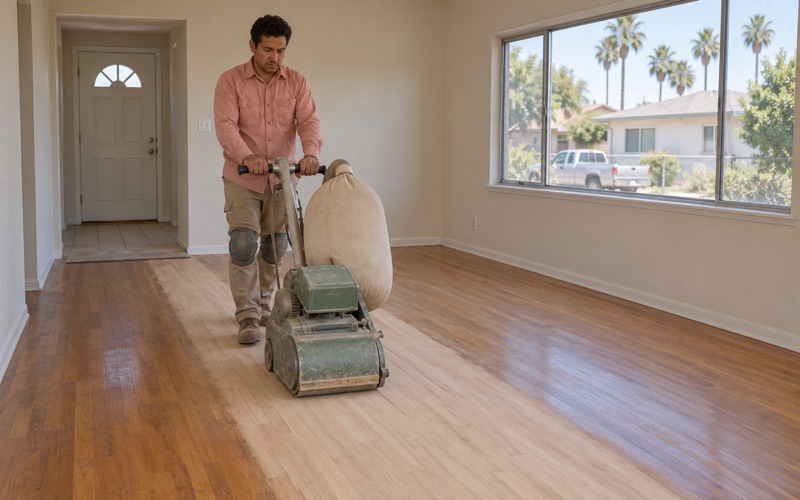
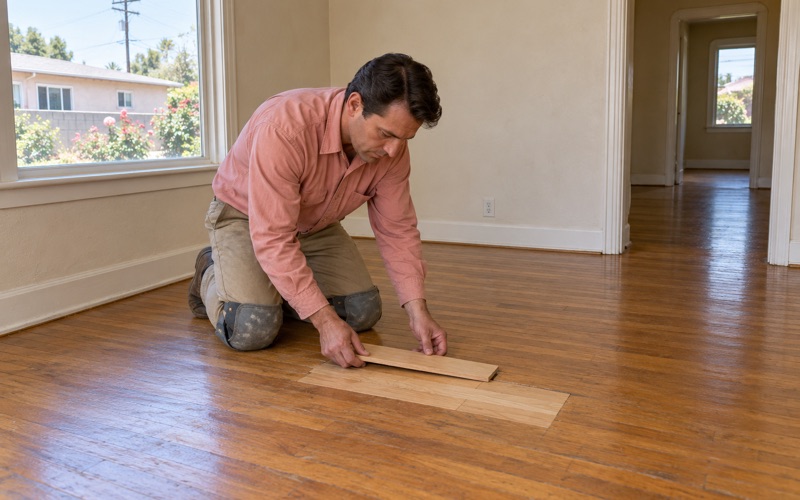
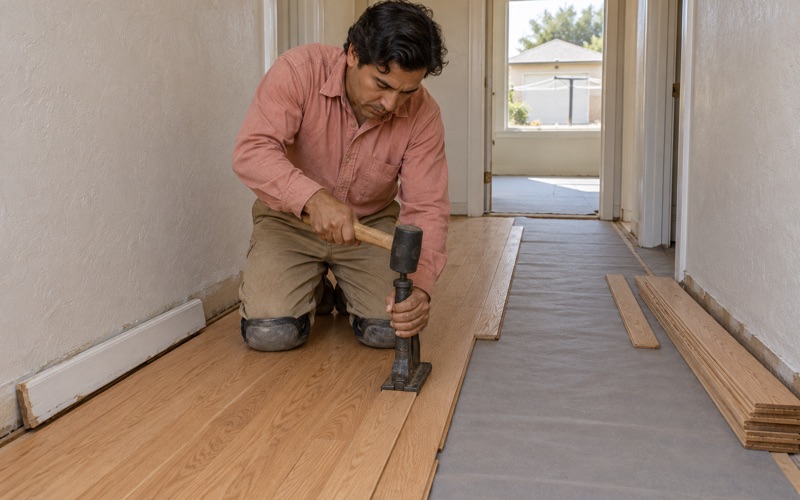
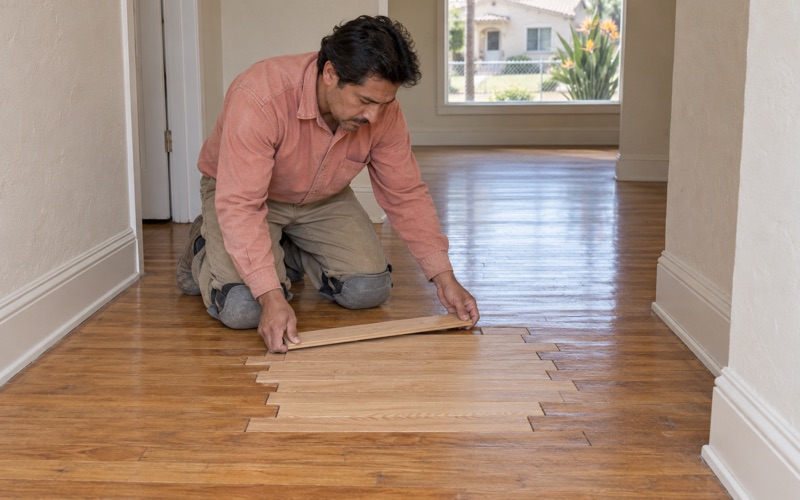
Most of what we do in covered buildings is repair. That means pulling and weaving in damaged boards, refastening squeaks and nail pops, spot-sanding a worn traffic lane, or screening and recoating a hallway so the finish holds for years to come. We price that work as repair on the estimate, with the room, the area and the cause written out, because the words on the paper matter to an owner working under a rent ordinance.
Every estimate we write names the unit number, the date the request came in and the date we looked at the floor. The sections below follow that thread: what the city’s registry asks landlords to describe, how a floor repair request gets answered, what a useful repair file holds, and how the work changes in the older buildings that make up much of the local rental stock.
What the Rental Registry Asks, and Which Units It Covers
Ordinance No. 2024-05 in plain terms
Huntington Park adopted rent stabilization as Ordinance No. 2024-05 on November 18, 2024, adding Chapter 21 to Title 8 of the municipal code. The council passed it unanimously, and the Community Development Department administers it. For covered units, yearly increases are capped at 3 percent or 100 percent of regional CPI, whichever is lower, and an owner may set market rent when a unit becomes vacant.
The piece that touches our work most is the registry in section 8-21.9. A landlord may not collect rent on a covered unit without registering it, and the registration lists the year built, the certificate of occupancy or final permit date, the bedrooms and bathrooms, and a description of the housing services the unit comes with. The ordinance adds that landlords who fail to register may not enforce rent increases or evictions.
Which units the ordinance reaches
Not every rental is covered. Section 8-21.2 exempts units with a certificate of occupancy issued after February 1, 1995, units that can be sold separately from the rest of the property, including single-family homes, condominiums and townhomes, subsidized units, and owner-occupied properties with no more than two rental units. An owner unsure where a building falls should confirm that with the city rather than with a flooring contractor.
That scope still leaves a lot of doors. Huntington Park households are 75.8 percent renters, 11,108 of 14,653 occupied units, and 41.1 percent of renter households live in buildings of five or more units. When a Huntington Park owner calls us about a floor, one of our first questions is whether the unit is registered, because that shapes how the estimate and invoice should read.
Why the details on file matter
The year built on a registration tells us which era of construction we are likely walking into before we arrive. The ordinance also carries a civil penalty of up to $1,000 per violation, which is one reason the owners we work with want their repair paperwork in order long before anyone asks to see it.
Looking for wood-flooring closer to Alondra Park? See Wood-Flooring Services in Alondra Park.
Housing Services and a Prompt Answer to Repair Requests
A housing services description is not a flooring specification, and we do not read it as one. What it does is set expectations about what the unit provides. Section 8-21.8(a) lets tenants petition when housing services have been reduced, with decreased maintenance given as an example. Whether any particular floor condition amounts to that is a matter for the city’s process, never something we decide.
Repair requests and the 190-day window
Sections 8-21.8(c) and (d) prohibit retaliation, and failing to perform necessary repairs after a tenant requests repairs or maintenance is one of the listed forms. Within 190 days of such a request, that failure is presumed to be retaliation. For the flooring side of the job, the practical lesson is plain: when a floor repair is requested, get it scoped and scheduled, and keep proof of when each step happened.
That is where a flooring contractor either helps or gets in the way. We schedule the site visit as soon as the unit can be reached, write the scope promptly, and put the planned start date in writing. If a board has to be sourced to match or a finish needs cure time, the estimate says so, so any gap between request and completion has an explanation on paper.
Scoping the work as repair
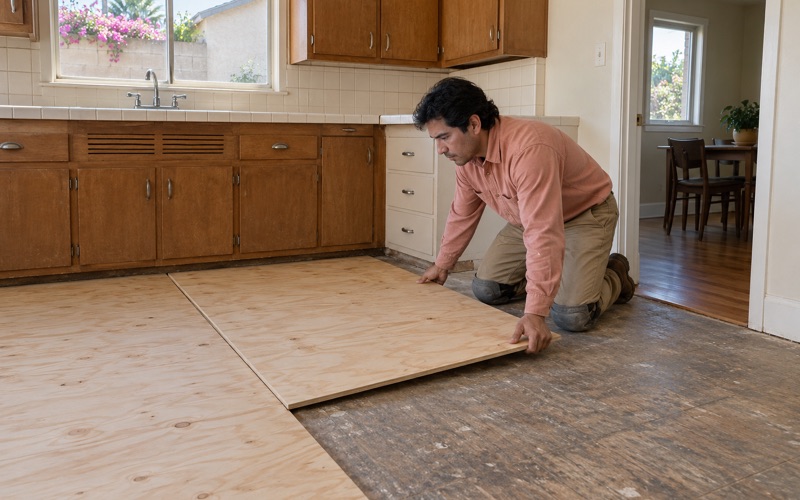
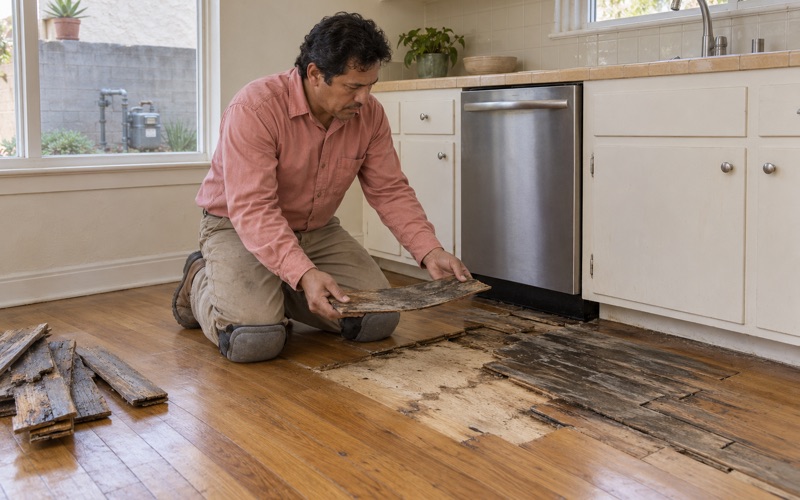
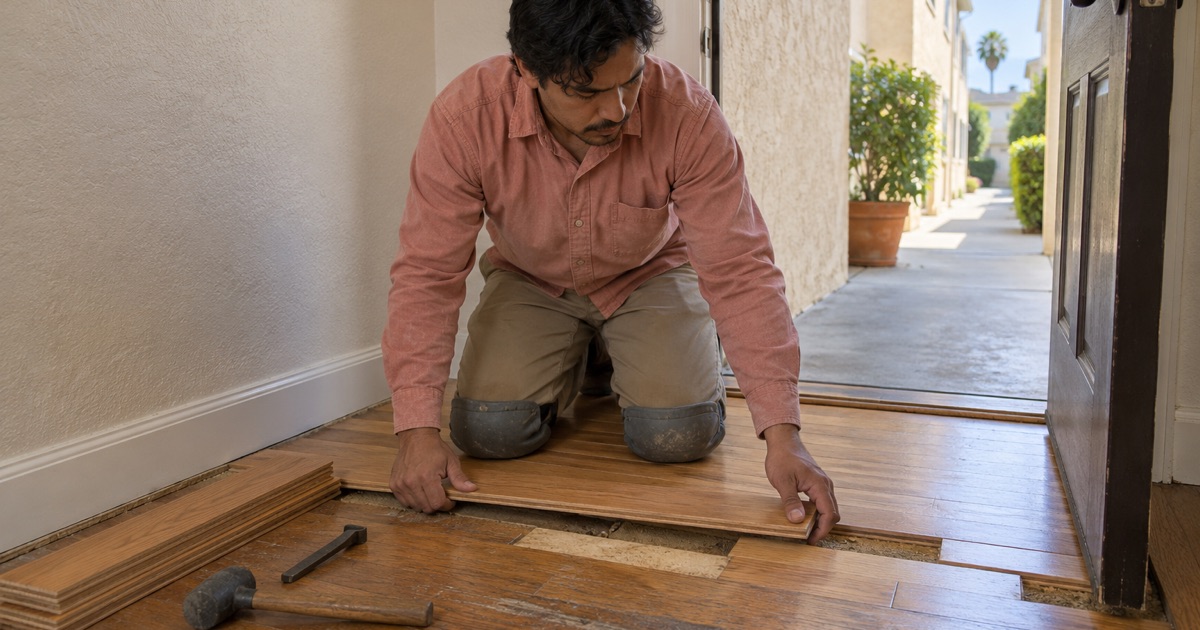
We describe the work by what it is, so a water-stained section near a dishwasher becomes a board replacement with a weave-in repair, a moisture reading and a note on the source. A worn lane becomes a screen and recoat. A soft spot becomes a subfloor check before any finish floor is priced. We never write repair work up as an upgrade, because a repair request deserves a repair answer.
When the cause is water, we trace it before replacing any wood. We photograph the area and log moisture content with a wood moisture meter, and those readings are laid out so an insurance adjuster can use them. They also keep a patched floor from cupping again because a supply line kept dripping underneath the new boards after we left.
Repair Records That Match the Registration
Records are the part of floor work that outlasts the floor itself. Our invoices name the property address, the unit, the rooms touched, the board count or square footage, the materials, the finish product and the completion date. That lines up with what the registry already holds: a unit registered with a stated number of bedrooms and bathrooms should have repair records describing the same rooms in the same terms.
What goes in the file
For each covered unit we leave the owner a dated estimate, a dated invoice, before and after photos, and any moisture readings taken. If we find a condition outside the request, such as loose subfloor near a bathroom, we note it on a separate line with a recommendation. The owner can then decide on it without it blurring the record of the repair that was asked for.
We also record the coating. Every finish we apply is chosen from products legal in the South Coast air basin under SCAQMD Rule 1113 and its 275 g/L limit for wood coatings. With the product name on the invoice, the next contractor can match sheen level and chemistry for a future touch-up instead of guessing at what went down.
Stairs, thresholds and small items
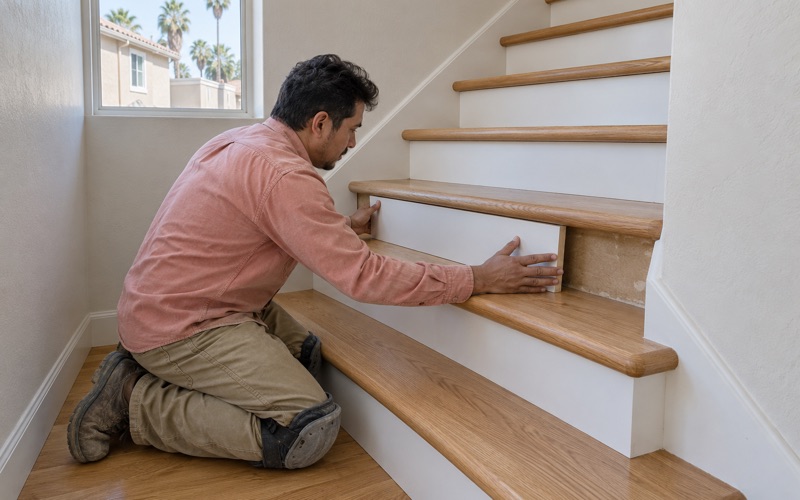
Small repairs are easy to lose track of, so we itemize them. A cracked stair tread is priced per tread and riser rather than folded into a square-foot number, a loose reducer strip or T-molding at a doorway gets its own line, and shoe molding pulled for a board replacement is listed as reset. When the same unit calls again, the owner can see exactly what was touched.
The same file earns its keep when a unit turns over. An owner walking an empty unit can compare the floor against dated photos and invoices, see which boards were already replaced and when, and start the next repair from a known condition instead of from memory. Estimates and invoices written this way also travel well to a move-out review.
Floor Work in Older Covered Buildings
Covered units are, by the exemption date alone, the older part of the city’s housing. Of Huntington Park’s 15,128 housing units, 74.1 percent were built before 1980 and 27.5 percent in 1939 or earlier. The city incorporated in 1906 as a streetcar suburb, and that age shows up in how we plan a repair before the first board comes up.
Lead-safe practice before sanding
In pre-1978 housing, the housing the EPA Renovation, Repair and Painting rule addresses, we use lead-safe work practices. Sanding a floor or pulling painted baseboard and trim can disturb old paint, so containment, a dustless sanding system and a careful cleanup are written into the scope. Tenants living next to the work are better served by that than by speed.
Old tile, black mastic and earlier layers
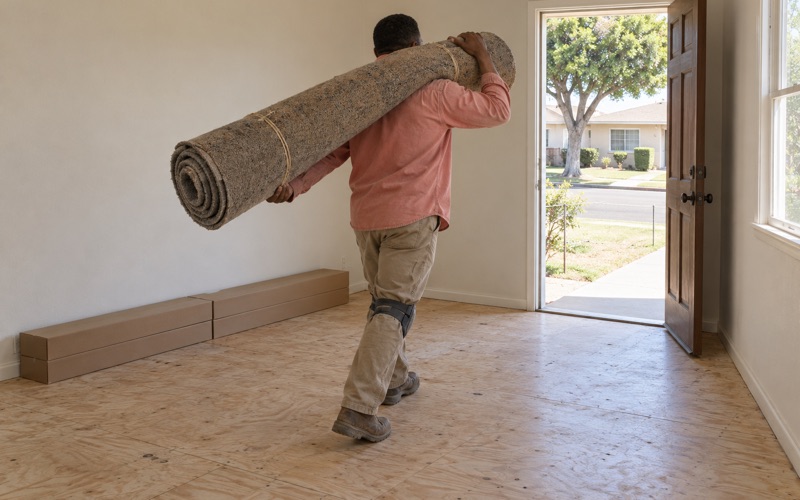
When we pull carpet or sheet vinyl in an older unit and find 9x9 tile or black mastic underneath, we stop. That layer is treated as a possible asbestos question before anything is sanded or scraped, and an asbestos survey comes before the schedule moves. SCAQMD Rule 1403 governs how that material is handled, and the owner hears about it the same day.
Framing and moisture before the finish floor
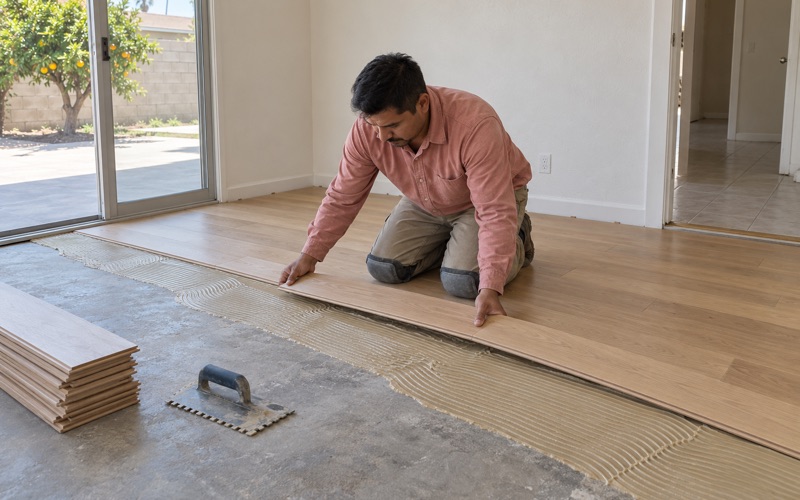
A sloping, bouncy or soft floor is traced to the subfloor and floor joists before any finish floor is priced, because a new board over a failing substrate only moves the complaint. Before new wood goes in, we measure moisture in the wood and in any concrete slab, write the readings down, and give the material time for acclimation.
For an owner of a covered Huntington Park unit, that is the order we work in. We confirm the request date, look at the floor, write a repair scope, do the work, and leave a record that reads the same way the registration does. Nothing in the file should surprise the owner, the tenant or anyone at the city who reads it later.
- 20+ Years of Wood Flooring
- Written Scopes and Estimates
- Free Estimates