
Compton Wood Flooring specializes in hardwood floor restoration for older homes in Compton, CA, serving surrounding cities including East Rancho Dominguez, Willowbrook, West Rancho Dominguez, Lynwood and Watts, and we bring more than 20 years of work on original floors to every project. Half of Compton’s houses were built between 1940 and 1959, and many of them still have their first oak or fir floors hidden under carpet, sheet linoleum, paint or decades of wax. Restoration is the work of getting those floors back into daily use.
Restoration goes further than a refinish. It means taking up what covers the floor, removing old adhesives and fasteners, dealing with lead paint or old tile safely, repairing or replacing damaged boards, closing old heating openings, and only then sanding and finishing. Each step depends on the one before, and skipping one shows up on the finished floor.
We assess every board before recommending restoration or replacement. An old floor that looks rough when first uncovered is often in better shape than it seems, and saving it usually costs less and keeps the character that made the house worth buying.
Uncovering the Original Floor
Taking Up Carpet, Pad and Tack Strip
Most original floors in Compton spent years under wall-to-wall carpet. We remove the carpet, pad and tack strip, pull every staple and nail, and look for the damage carpet often hides: pet stains, water marks near doorways, and boards cut or patched when the house was remodeled.
Once the floor is exposed, we walk every room and mark what needs attention. That map becomes the scope, so the estimate reflects the floor you actually have rather than a guess made through a lifted corner.
Lifting Linoleum and Old Adhesive
Sheet linoleum and old vinyl were often glued directly to the hardwood, especially in kitchens and hallways. The adhesive under them has to be removed without gouging the wood. In houses of this age, we treat black mastic and 9x9 floor tile as a possible asbestos question first, with an asbestos survey before anything is scraped or sanded, and removal handled under SCAQMD Rule 1403 if it tests positive.
Paint, Wax and Old Finishes
Paint spatter, layers of floor wax and several generations of incompatible finish are common on old floors. Floor wax buildup gums up sandpaper and prevents new finish from bonding, so it has to be stripped fully. Where paint is involved, we assume lead is possible in a pre-1978 house and follow lead-safe work practices until testing says otherwise.
Repairing What Time Left Behind
Replacing Damaged and Missing Boards
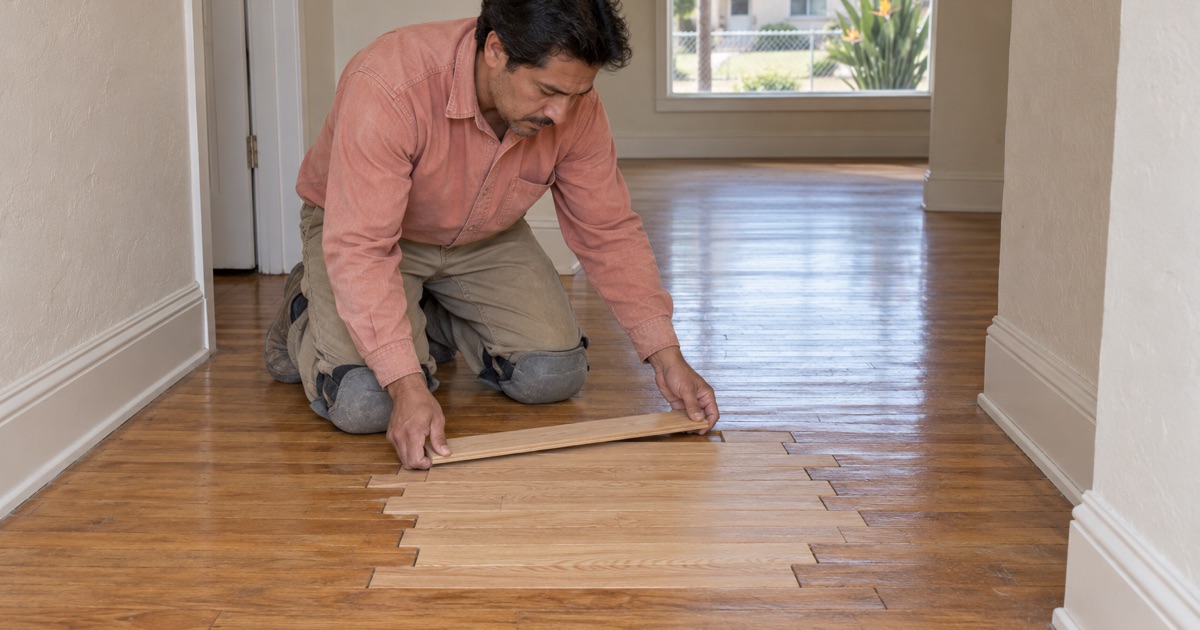
Boards damaged by water, termites, pet urine or old remodels are removed and replaced with matched wood woven into the existing floor. We source reclaimed boards or borrow boards from closets to keep the species and color consistent. Replacing only what is truly damaged keeps the floor’s original character intact.
Older floors were often milled to widths and tongue-and-groove profiles that are no longer standard. When nothing on the market matches, we have boards milled to fit, so the repair locks in properly rather than sitting slightly proud of the floor around it.
Closing Floor Furnace Openings
Many homes of Compton’s era were heated by a floor furnace set into the hallway. When it is removed, the opening is often covered with a loose piece of plywood. We frame the opening, sheath it flush and weave matching boards into the surrounding floor so the patch disappears once the floor is finished.
Tightening Loose and Squeaky Boards
Old floors loosen as nails work free and board subfloors shrink. We refasten loose boards from below where the crawlspace allows, or from above with hidden fasteners. A restored floor should feel solid, not just look good.
Refinishing the Restored Floor
Sanding Old Oak and Douglas Fir
Old oak strip floors take a full sand well when there is enough wood left above the tongue, which we measure before starting. Douglas fir is softer and dents easily, so we sand it more gently and usually finish it clear to avoid blotchy color. Every floor goes through a full grit sequence so the surface is flat and even.
Choosing a Color for an Old Floor
Many old oak floors have turned orange from aged oil-based finishes. Sanding removes that tone, and we can then leave the wood natural, stain it or tone it to suit the house. We apply stain samples on your own floor so you can see how the old wood takes color before committing.
Some homeowners want the floor to look as it did when the house was new, and others want a modern color on old wood. Both are possible on a restored floor, and we talk through how each option will age in your light and with your traffic.
Finishes That Meet Local Air Rules
We finish restored floors with waterborne polyurethane, oil-modified polyurethane or a hardwax oil, all within the South Coast air district’s 275 g/L VOC limit for wood coatings. Each has a different look, sheen and maintenance pattern, and we recommend one based on how the room is used.
Restoration Before a Sale or Rental
Restoring Floors Before Listing
Original hardwood is a selling point, and a restored floor photographs well in a listing. Compton’s presale inspection covers every room and closet, so we also fix soft spots, lifted boards and old patches that could end up on the report, and provide a written scope of the work.
Restoring Floors in a Rental
For landlords, restoring original hardwood between tenants often costs less over time than replacing carpet repeatedly. A sound, sealed wood floor is easier to clean and inspect, and our itemized invoices help document condition for the next move-in.
- 20+ Years of Wood Flooring
- Written Scopes and Estimates
- Free Estimates