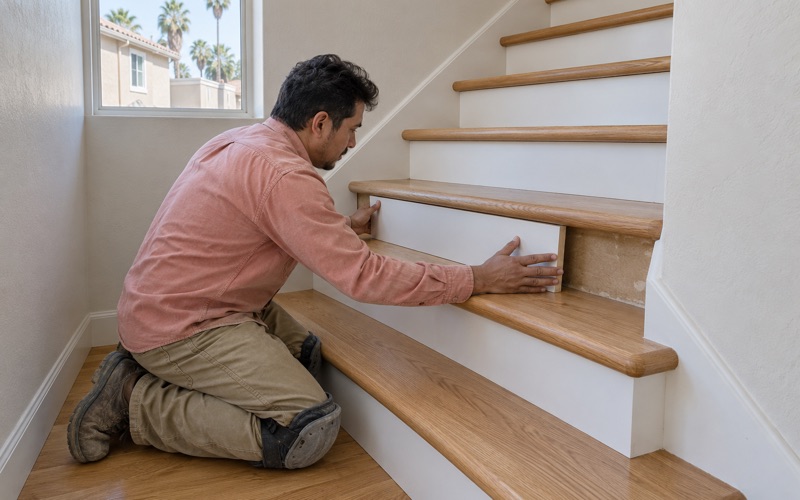
Compton Wood Flooring does wood flooring in Gardena for a lot of owners who are getting ready to sell, and for them the calendar matters as much as the finish. With more than 20 years of sanding, repairing and installing wood floors behind us, we plan the work so it lands before the city’s point-of-sale paperwork starts moving rather than in the middle of it.
Selling a house here is not just a matter of listing it and waiting for offers. Gardena asks for a city report before escrow closes, and that report runs on its own schedule that nobody can speed up. A refinish booked too late can collide with it, while one booked early is finished, cured and documented before the application goes in.
Below we walk through how that report works, how we time a floor job around it, what paperwork to keep when a job goes deeper than the finish, and which sellers the requirement reaches. We stick to what the city publishes about the report and leave everything else to the people who administer it.
What Gardena’s Property Information Report Is

Gardena’s Truth in Sales law requires a Property Information Report to be made available to the buyer before a sale is completed. The city handles it through the Building and Safety Division of its Community Development Department, because Gardena runs its own building inspections rather than contracting them out to Los Angeles County.
What the Report Lists
According to the city, the report includes a list of all presently observable violations of housing and building codes, as applicable, along with zoning regulations. It also sets out variances, the permits on record, any restrictions, the zone classification and authorized use of the property, and the business licenses of occupants. The inspection behind it addresses both exterior and interior conditions.
We are careful about what that means for a floor. The city describes a code, zoning and permit record, and it does not publish a room-by-room list of what gets looked at inside, so we never tell a seller that a refinish will help or hurt the report. What a refinish does change is how the house shows to buyers walking through it during those same weeks.
Who Orders It and How Long It Lasts
The application falls to the owner of the property or, when the house is listed with a licensed real estate broker, to that broker. Title-company fee lists put the report at $294 and up. Sellers usually leave the filing to their agent, but it helps to know who is responsible for it when you are setting dates for other work.
Once issued, the report stays valid for six months, and the city allows a six-month extension when no structural changes, improvements or additions have been made in the meantime. Skipping it is not a shortcut either: the city states that anyone in violation of the Property Information Report law is guilty of a misdemeanor.
Looking for wood-flooring closer to West Athens? See Wood-Flooring in West Athens.
Timing Floor Work Around the Report Window
The city asks for the application at least thirty days before the sale is consummated. The report then takes 15 business days to complete, and the city says plainly that there is no expediting. The finished report has to reach the buyer no later than fifteen days before escrow closes.
Laid out on a calendar, those dates leave less slack than they seem to. Business days run longer than they sound once weekends and holidays drop out. A seller who opens escrow and only then thinks about the floors may find the report and the refinish competing for the same weeks, with movers, stagers and photographers queued up behind both.
Why We Schedule the Floor First
Our preference is simple: the floor work is done, cured and cleaned up before the owner or broker files the application. That keeps sanding equipment, drop cloths and finish odor out of the house during the weeks when the report is being prepared and buyers are coming through for showings.
Finishes need their time. A waterborne polyurethane and an oil-modified polyurethane cure on different schedules, and a floor that feels dry can still be soft enough to mark under furniture feet or a moving dolly. We choose from products legal to apply in the South Coast air basin under the 275 g/L wood-coating limit in SCAQMD Rule 1113, and we build the cure time into the dates we give a seller.
Moisture gets checked before anything is ordered. We take wood moisture meter readings in the boards, and where a floor goes over concrete we test the slab with an ASTM F2170 in-situ relative humidity test or a calcium chloride moisture test, then write the readings down. Finding a moisture problem after the report is filed is exactly the late surprise a seller does not need.
Working Backward From Closing
When a seller gives us a target closing date, we count backward. Delivery to the buyer has to happen fifteen days before escrow closes, and the report’s fifteen business days come before that, which often pushes the realistic filing date earlier than the thirty-day minimum. Our job and its cure time go ahead of that filing date.
The result is usually a start date earlier than the seller had in mind. It is far better to learn that when we write the estimate than halfway through escrow, when every day of delay has a buyer, a lender and two agents waiting on it.
Keeping Records of Work Done Below the Finish
The report lists the permits on record for the property, which makes paperwork matter for any floor job that went deeper than sanding and coating. Whether a particular job called for a permit is a question for the Building and Safety Division, and we tell sellers to ask it there rather than take anyone’s word for it, including ours.
Finish Work Versus Structural Work
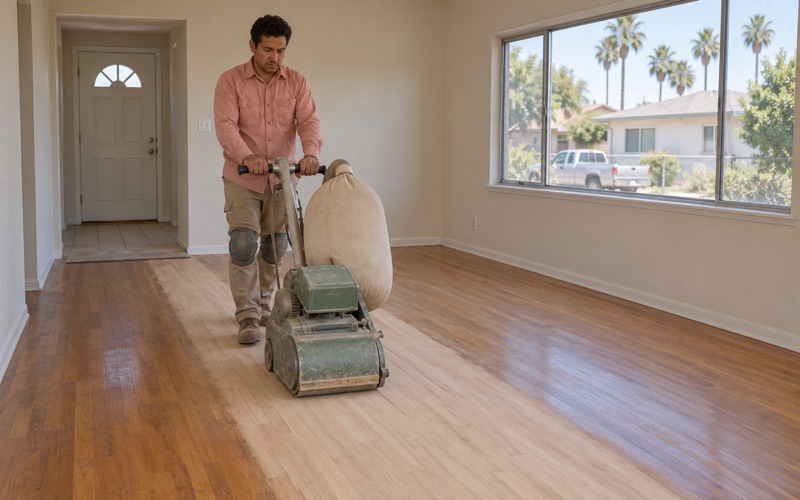
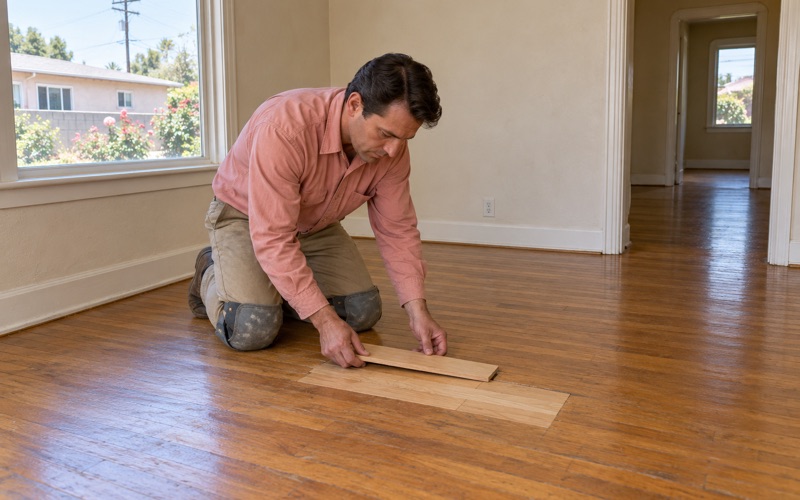
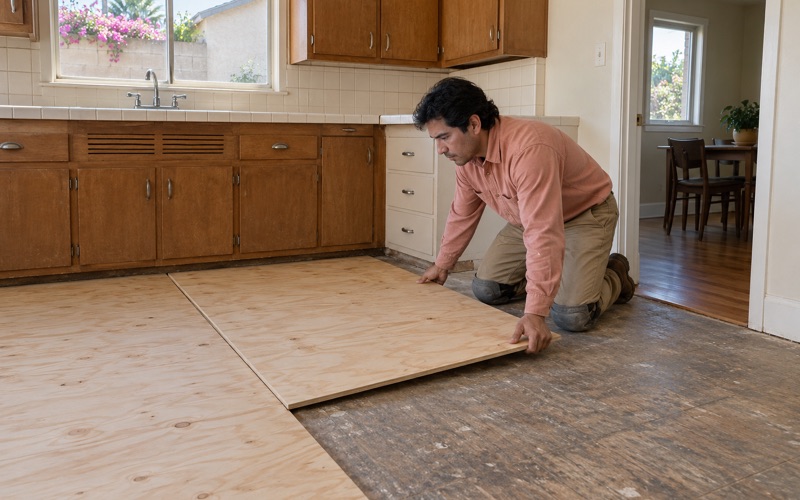
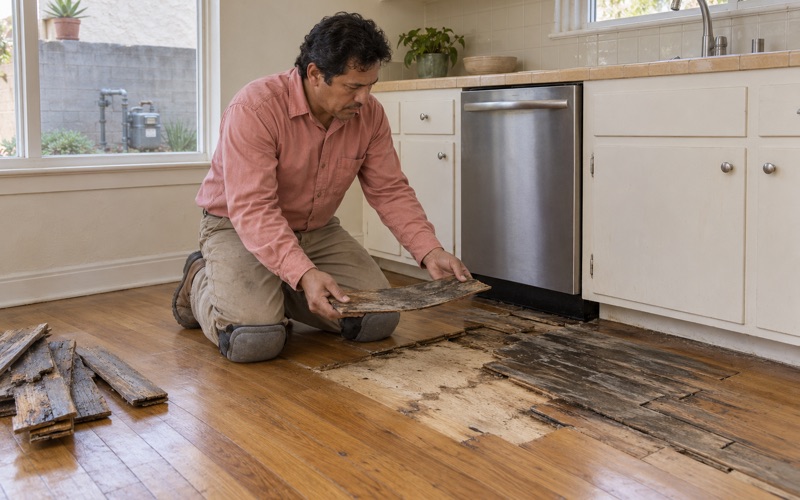
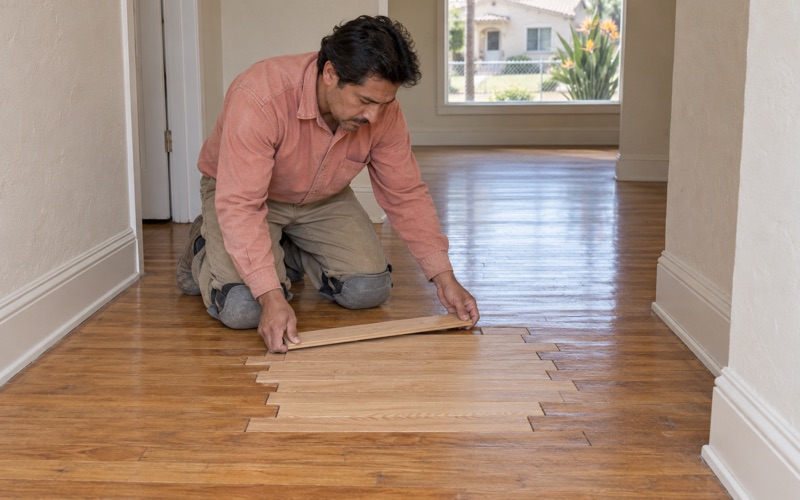
A screen and recoat, a full sand and refinish through a proper grit sequence, or a weave-in repair of a few damaged boards stays within the floor itself. Tracing a sloping, bouncy or soft floor to the subfloor and framing, sistering a sagging joist, or closing an old floor furnace opening with framing and woven-in boards belongs to a different category, because it touches what holds the floor up.
We separate those two categories on every written scope. A buyer reading through a stack of disclosures can see at a glance which line items were cosmetic and which reached below the boards. A seller can then answer questions about the deeper work without guessing at what a crew did years earlier.
What We Hand a Seller
At the end of a job we provide a written scope, an itemized invoice and, where they apply, the moisture readings and photos taken as the work went along. On a water-damage repair we also record the source we traced and the readings we found in the wood, the same documentation an insurance adjuster would ask to see.
If a permit was pulled for structural work, keep the permit and its inspection record with everything else. The city schedules building inspections at (310) 217-9530 with 24 hours’ notice, and it notes that a permit is valid for 180 days unless work is active and progressing. Letting one lapse partway through a pre-sale project is an avoidable loose end.
Older Houses and Undocumented Past Work
Gardena’s housing has some age to it. Census figures show 43.7 percent of the city’s housing units were built before 1960, and the 1950s were the busiest single decade at 28.4 percent. A house that old has usually passed through several owners, and its floors may carry patches and repairs nobody ever wrote down.
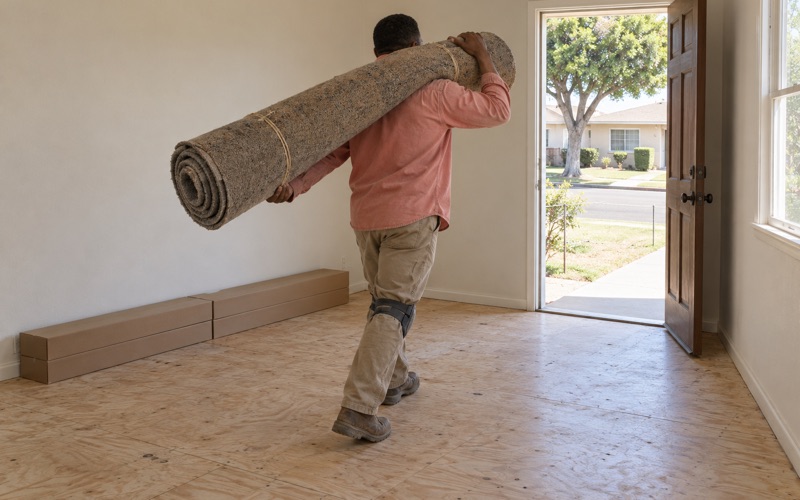
That is why we assess any floor found under carpet, linoleum or paint board by board before quoting a replacement, and why old tile and black mastic are treated as a possible asbestos question before anything is sanded or scraped. Houses built before 1978 get lead-safe practices under the EPA Renovation, Repair and Painting rule. Each of those steps leaves notes a seller can add to the file.
Who the Report Reaches, and Finishing Before Escrow
The requirement attaches to the sale of a building or property, and the exemptions the city lists are narrow. Detached houses are where most Gardena owners live, with 72.8 percent of owner households in one, so the single-family seller is the person we most often plan around.
Detached Houses and Multi-Unit Buildings
For a detached house the floor job is usually one sequence: rooms emptied, floors repaired or sanded, finish applied and cured. Nothing in the city’s exemption list covers a duplex or a small apartment building, so the owner of one should expect to plan for the report as well.
With several units, each one is its own small project, and vacancy decides when we can get inside. We lay those units out on one calendar with the report deadline at the end of it, so the last unit is finished and cured before the application goes in rather than after.
Condominiums, Townhomes and New Subdivisions
The city exempts condominiums and townhomes from the report. It also exempts the first sale of a building or property in a new subdivision whose final map was approved and recorded not more than two years before that sale. A condo or townhome seller in Gardena is not working against the fifteen-business-day window at all.
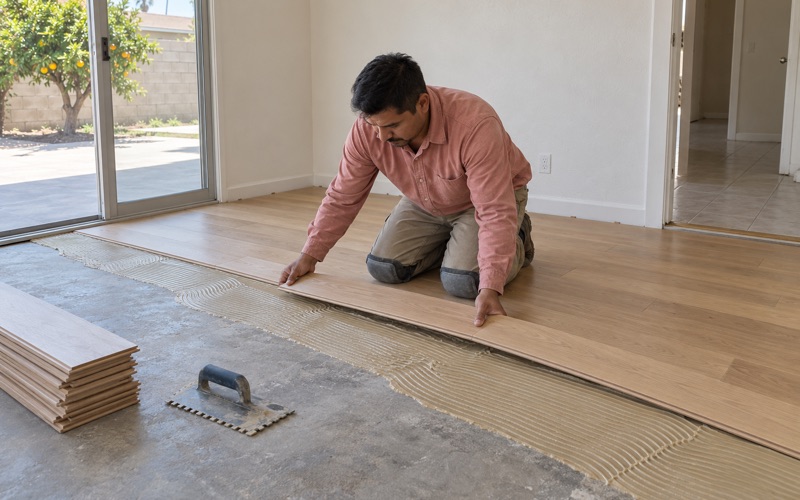
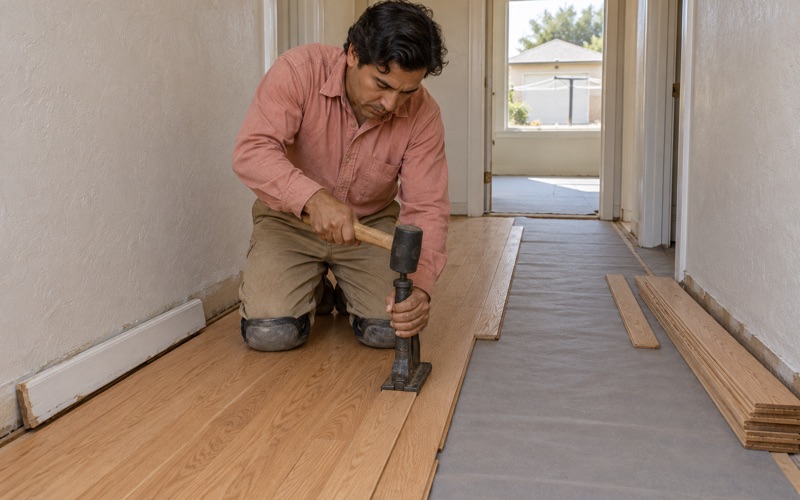
That changes the schedule, not the standard of the work. A condo floor still needs moisture readings, acclimation and the right installation method, whether that is nail-down, glue-down or floating. An association may also have its own rules about working hours and what goes under a new floor, so we ask for those before we price anything.
Finishing a Floor Without Rushing It
Rushed floor work shows. Stain applied over damp boards turns blotchy, a coat laid over one that has not cured can stay tacky, and a finish that meets a moving dolly too soon picks up marks a buyer will notice at the final walk-through. None of that gets fixed quickly once the house is under contract.
Our answer is to start early enough that nothing has to be hurried. Acclimation for new material, testing, repairs, each pass of the grit sequence and every coat of finish get their own days, with some slack for the unexpected. A floor with an orange cast from an aging finish, for example, may need a few stain samples before the owner settles on a color.
If you are planning to sell a house in Gardena, bring us in before the listing goes up rather than after an offer arrives. We will look at the floors, explain what the work involves and how long it takes, and give you a written scope with dates that leave the Property Information Report its own room on the calendar.
- 20+ Years of Wood Flooring
- Written Scopes and Estimates
- Free Estimates