Compton Wood Flooring has spent more than 20 years on wood-flooring in Florence-Graham and the blocks around it, and much of that work happens in homes where nobody can move out for a week. We plan sanding, repairs and new installation around families who keep cooking, sleeping and leaving for work in the same rooms we are working on.
A floor in a busy house does not wear evenly. The hallway, the kitchen path and the front room take most of the traffic, while a back bedroom may look almost new. We read those patterns before we quote, so the money goes where the wear actually is instead of into one blanket square-foot number for the whole house.
This page explains how we handle large and multigenerational households: where damage shows up first, which finishes stand up to many feet, and how we phase a job so the house stays livable. Every estimate comes in writing, room by room, so a family can decide what to do now and what can wait for a later season.
Big Households and Where a Full House Wears a Floor
The County’s Florence-Firestone Community Plan describes the area as one of the densest communities in the County, at 4.2 persons per dwelling unit compared with 2.86 countywide. The same plan notes that several families often share a single housing unit, and it names strong family orientation with multigenerational households as a key strength of the community.
Census figures for the Florence-Graham CDP point the same way. Of 14,501 occupied units, 3,506, or 24.2 percent, have more than one occupant per room, and owner households cross that line slightly more often than renters do. We treat that as a planning fact, not a judgment. It tells us how hard the floor works and how little empty space we will have to stage tools and furniture.
The Traffic Lanes
In a house holding several generations, the route from the front door to the kitchen and the hallway to the bathroom carry the heaviest load. On site-finished hardwood we often find the finish worn through to bare wood in a narrow lane there, gray from dirt ground into the fibers, while the edges of the same room still hold their sheen.
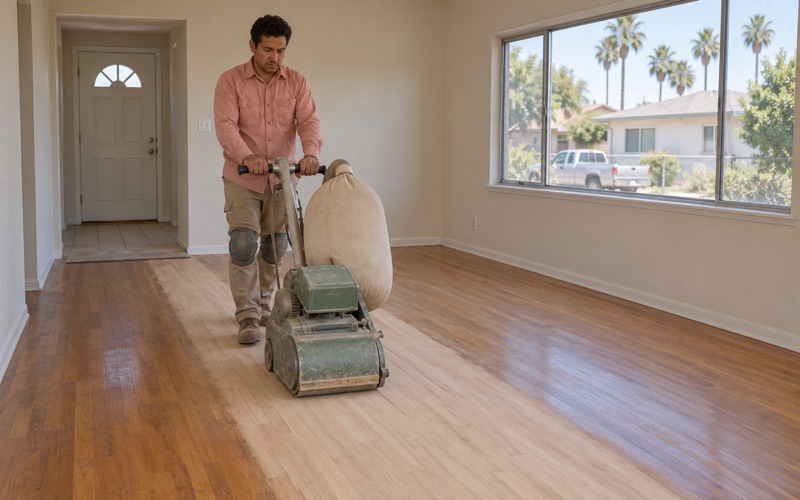
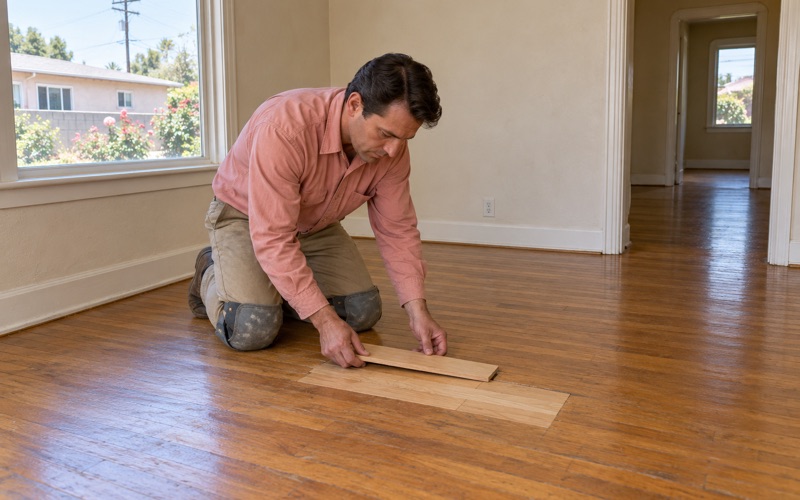
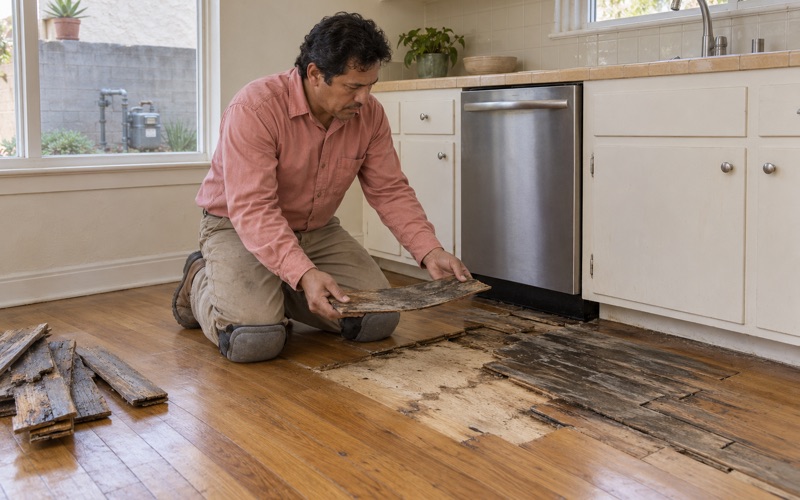
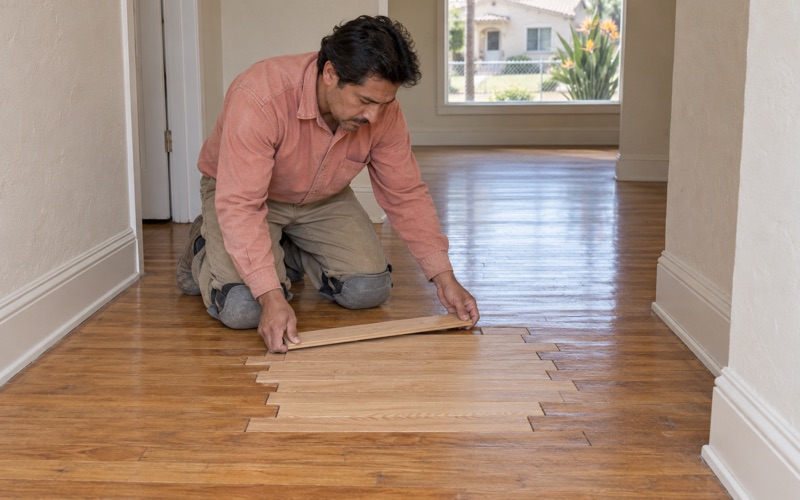
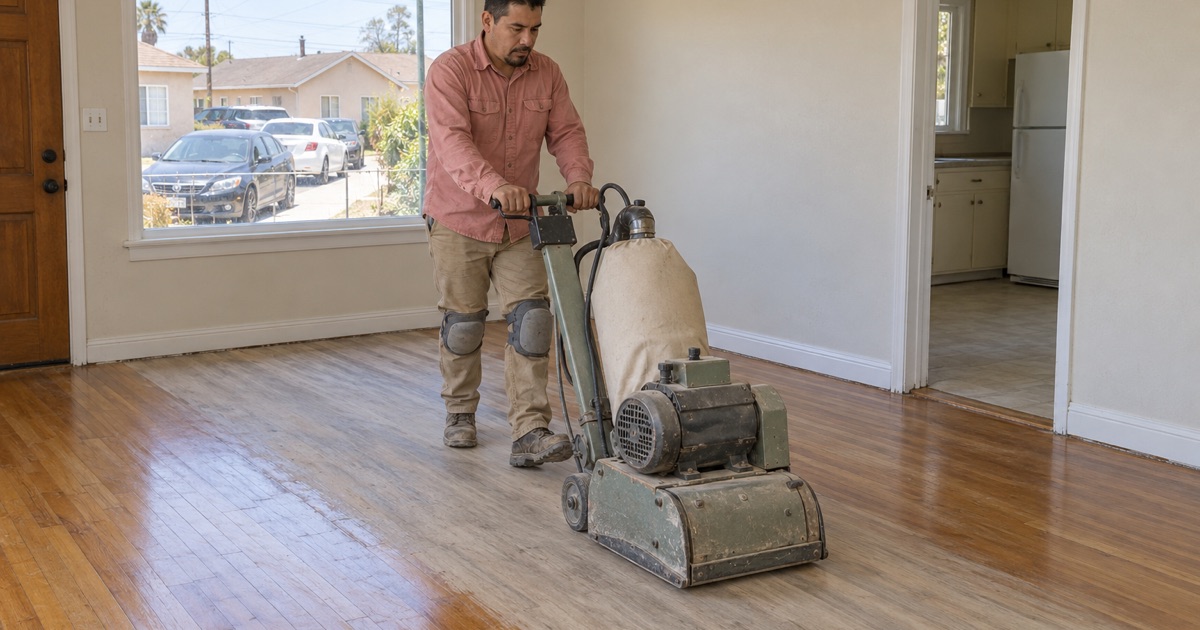
When that lane has only lost finish, a screen and recoat or a sanding of the affected rooms may be enough. When the gray has gone into the wood, or boards have cupped near a sink or a washer, we plan board replacement and weave-in repair before anything is refinished, so the new coat has sound wood under it.
Chairs, Beds and Rolling Loads
Dining tables that seat eight or ten, and chairs that slide back from them at every meal, grind small arcs into the finish. Rooms that double as bedrooms at night pick up dents from bed frames and scuffs from mattresses moved in and out during the day.
Rolling loads matter as well. A wheelchair, a walker or a stroller crossing the same threshold daily can wear down a reducer strip or a T-molding faster than the floor beside it. We check those transitions and replace worn ones as part of the scope rather than leaving a trip edge behind.
Older Houses Carrying the Load
The houses holding these families are mostly old. Of 15,004 housing units counted in the CDP, 47.3 percent were built before 1950, and the County plan says about half of residential structures predate 1960 and require additional maintenance to keep providing good housing.
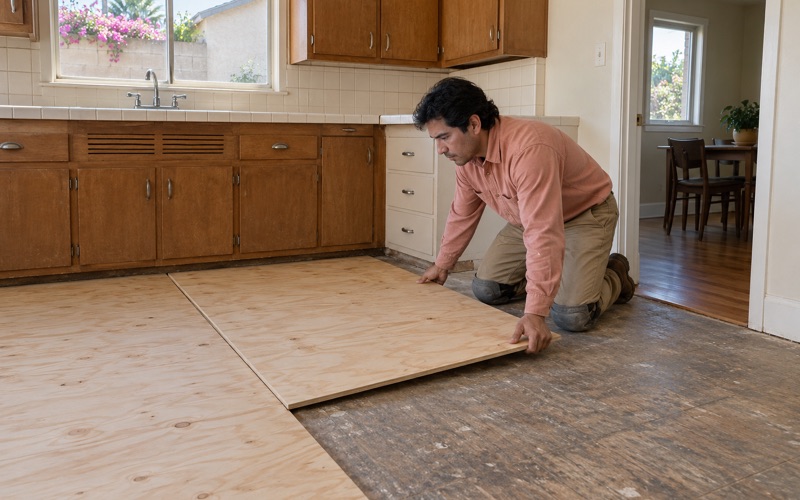
Decades of daily traffic on an old floor show up as squeaks, nail pops, board gaps and soft spots. We trace a bouncy or sloping floor to the subfloor and joists before we price a new finish, because a fresh coat laid over a weak frame will not hold up in a house this busy.
Looking for wood-flooring closer to Westmont? See Wood-Flooring in Westmont.
Finishes That Hold Up to Many Feet
Choosing a finish for a large household starts with how the house is used, not with a sample board. We talk through who walks where, whether there are pets, and how much time the family can give us between coats before we recommend a product.
Wood Species and Hardness
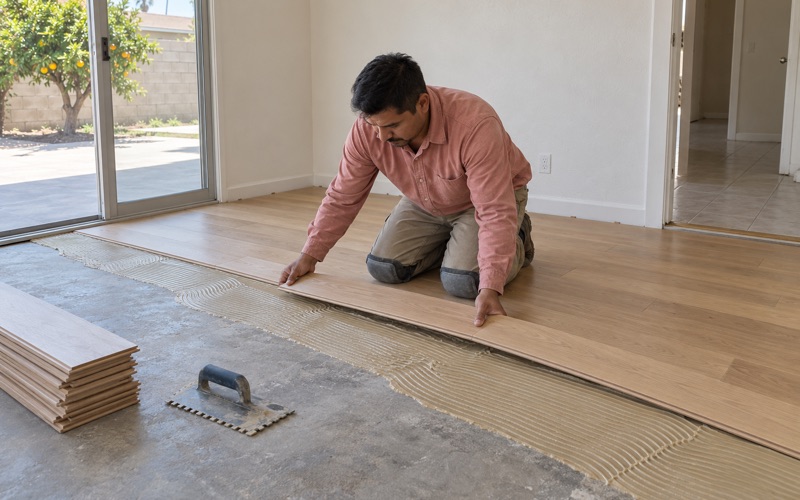
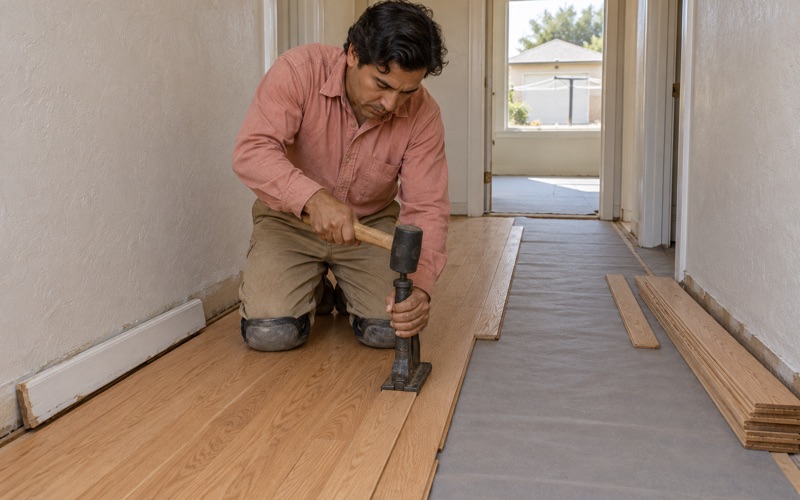
The Janka hardness rating is a useful guide when a household is choosing new boards. White oak and red oak are the common middle ground, hickory rates harder and resists dents from dropped pots and chair legs, and softer species show marks sooner.
Where the house already has solid strip flooring, we assess it board by board before anyone talks about replacement. An old floor with enough wood left above the tongue can often be sanded and refinished, and it keeps the look the family already knows.
Waterborne, Oil-Modified and Hardwax Oil
Waterborne polyurethane dries quickly and carries less odor, which matters when grandparents, small children and people working night shifts are all home during the job. Oil-modified polyurethane builds an amber tone and a tough film, but it needs longer cure time and steady ventilation.
A hardwax oil finish is easy to spot-repair in a worn lane, although it asks for more regular upkeep from the household. Every product we apply is chosen from those legal in the South Coast air basin under SCAQMD Rule 1113, which caps wood coatings at 275 g/L of VOC.
Sheen and Daily Care
Sheen level changes how a floor reads under heavy use. A satin or matte sheen hides fine scratches and dust between cleanings far better than gloss, which shows every footprint in a hallway that many people use each day.
We also leave written care notes: felt pads on chair legs, mats at each exterior door, and a damp-mop routine with a cleaner suited to the finish. Small habits like these protect a busy floor more than any upgrade in product, and they cost the family very little.
Doing the Work While Everyone Still Lives There
Many families here cannot move out, put furniture in storage or send relatives to a hotel while the floors are done. We plan the job in phases so each part of the house is out of service for only as long as the product requires.
Room-by-Room Phasing
We usually split a house into zones: bedrooms on one pass, living areas on another, and the kitchen and hallway last because everyone depends on them. Furniture moves into a finished zone before the next one starts, so the family always has somewhere to sleep and eat.
Each phase gets its own written scope and price. That lets a household spread the work across paydays or seasons without losing track of what was agreed, and it gives everyone in the house a clear schedule to plan around.
Dust, Air and Lead-Safe Work
With 78.6 percent of housing units here built before 1980, we treat pre-1978 housing rules as the default. We follow lead-safe practices under the EPA Renovation, Repair and Painting rule whenever painted trim or old finishes are disturbed, with plastic at doorways and careful cleanup that protects the people staying home.
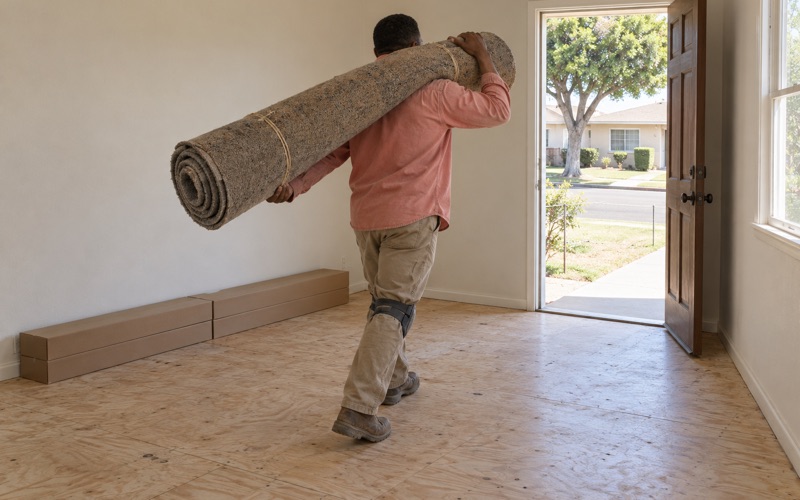
We sand with a dustless sanding system connected to the drum sander and edger. If old 9x9 tile or black mastic turns up under a floor covering, we stop and handle it as a possible asbestos question before anything is scraped or sanded.
Moisture and Timing
Before we order material for new boards, we read moisture content with a wood moisture meter and, over any concrete, run an ASTM F2170 in-situ relative humidity test or a calcium chloride test. The readings go into the file, and the boards acclimate before installation starts.
In a house full of people, cooking and showers raise indoor humidity, so we take those readings in the conditions the floor will actually live in. Cure times are planned around the household too, and we tell the family exactly when a room can take socks, then shoes, then furniture.
Planning for the Next Generation in the House
The County plan notes that many residents have lived in the community for decades and that others have returned to retire. A floor chosen now may serve grandparents, their children and the grandchildren who follow, so we plan for the long run rather than the next few years.
The plan looks ahead in the same way. Its Policy R-1.3, Housing for Large Households, calls for housing designed to meet the needs of large households and multigenerational families, including projects with multiple units of three or more bedrooms. When owners remodel with that in mind, the floor belongs in the design from the start.
Safety Underfoot
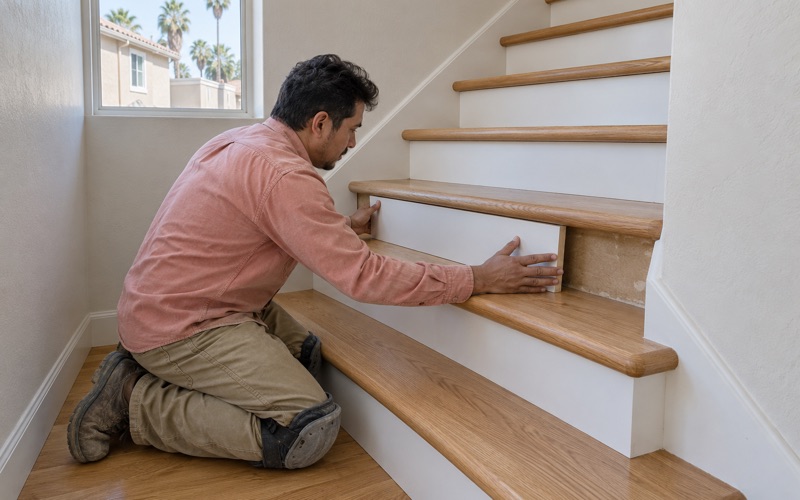
Older relatives need floors that are flat and predictable. We refasten lifted boards, fix nail pops and replace worn stair nosing, and we price stairs per tread and riser so the true cost of a safe staircase is clear before work begins.
Transitions between rooms get the same attention. A reducer strip that sits proud of the floor, or a gap where two flooring types meet, is the kind of edge that catches a slipper at night. We level those joins as part of the job instead of leaving them for later.
Refinish Now, Plan the Next Round
A solid hardwood floor can be sanded more than once over its life, while an engineered floor depends on its wear layer thickness. We explain how much wood is left, so a family knows whether today’s sanding leaves room for another round when the grandchildren are grown.
Owner-occupied units make up 36.6 percent of occupied homes here, and for those households we write down the species, stain and finish used. That record lets a future board replacement or screen and recoat match the floor instead of standing out as a patch, whoever in the family ends up owning the house.
- 20+ Years of Wood Flooring
- Written Scopes and Estimates
- Free Estimates