Compton Wood Flooring handles wood-flooring in Cudahy for owners who want the floor work inside a larger home repair done in the right order, and we bring more than 20 years in the trade to that sequence. Much of what we do here starts with a question nobody has asked yet: what sits under the current floor covering, and who pays to find out.
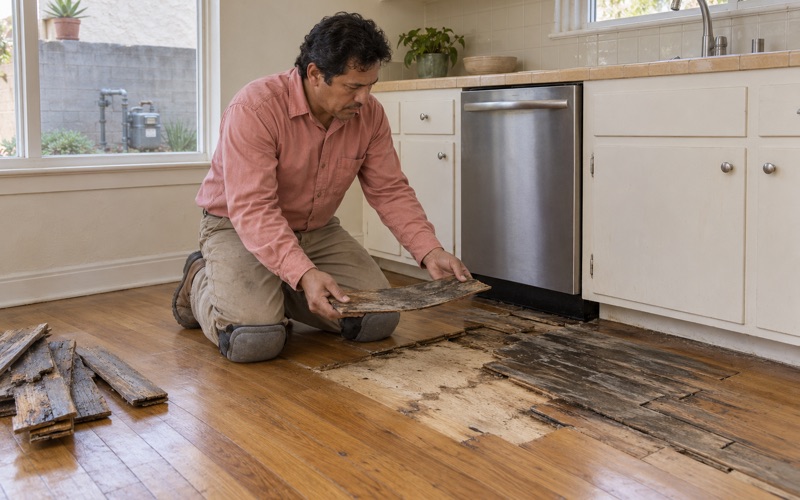
A floor rarely fails on its own. Soft spots beside a tub, a lifting sheet of vinyl at the kitchen sink and carpet stretched over a dip in the subfloor each point toward water, rot or framing, so we trace the cause before we price the surface. Our estimates are written room by room, which lets a scope be checked line against line.
This page explains how that approach fits a grant-funded rehabilitation in the city, where funding rules, testing requirements and a scope document all shape what a floor job looks like. If you are paying privately, the same order of work still applies. The paperwork is simply lighter.
What the City’s Rehabilitation Grant Covers for Floors
The guidelines and the grant amounts
Cudahy’s Owner-Occupied Housing Rehabilitation Program guidelines took effect July 8, 2026. The program is run by the City of Cudahy Housing Division with Community Development Block Grant money that flows through the Los Angeles County Development Authority, and it offers grants of up to $25,000 for a single-family home, up to $30,000 for a multi-family home and $15,000 for a mobile home affixed to a foundation and counted in the city’s permanent housing stock.
Eligibility is limited to owner-occupants within HUD’s low- and moderate-income limits, which narrows the field considerably. Only 14.2 percent of Cudahy households own their home, so most of the city’s floors sit in rental housing this program does not reach. For a townhome or condominium owner, the funded work stays inside the unit.
Kitchen and bath floors, carpet and dry rot
The eligible-work list on page 4 of the guidelines is unusually direct about floors. It names repair or replacement of kitchen and bath flooring, repair or replacement of carpet, dry rot repair, and repair of fire or water damage, alongside plumbing, painting, windows and cabinets. Termite and pest control inspections and extermination appear on the same list.
What the list does not do is name wood flooring in living rooms, bedrooms or hallways. We never tell an owner that a particular floor will be funded, because that decision belongs to the city. Item 17 says requests for repairs not listed will be considered on an as-needed basis, which is a route to ask rather than a promised answer.
Where a wood floor enters the picture
In practice, the floor work a grant names often sits right beside wood. A bathroom subfloor softened by a leaking toilet can run under the hallway threshold, and a kitchen leak can reach the boards in the next room. When water damage crosses from one room into another, we document its extent with photos and moisture readings so the scope reflects the whole damaged area.
Dry rot follows the same logic. Rot in a floor joist or a board subfloor is structural before it is cosmetic, and the guidelines treat structural repair on a case-by-case basis. We open the floor, probe the framing and write down what we find, so the city’s inspector and the owner see the same picture before anyone decides how far the repair should go.
Looking for wood-flooring closer to Bellflower? See Bellflower Wood-Flooring.
Testing Old Floor Coverings Before Anything Comes Up
The guidelines require proper sampling and, where needed, abatement on all pre-1980 residential units before any demolition, rehabilitation or renovation begins. They cite the federal NESHAP asbestos regulations, the state’s occupational safety rule 1529 and SCAQMD Rule 1403, and they list floor tiles and linoleum, along with the backing on vinyl sheet flooring, among the building components that may contain asbestos.
Why the rule reaches so many homes
That requirement covers most of the housing stock. Census figures put 68.3 percent of Cudahy’s housing units before 1980, and the busiest single decade of construction was the 1960s, the same decade the city incorporated on November 10, 1960. A kitchen re-floored two or three times since then may hold several layers, and any one of them could be the layer that matters.
We never assume the answer either way. A 9x9 tile or a vinyl sheet with a fibrous backing can look the same whether or not it contains asbestos, and black mastic under an old floor raises the same question. Only laboratory sampling settles it, which is why the sample is taken before a scraper touches the floor.
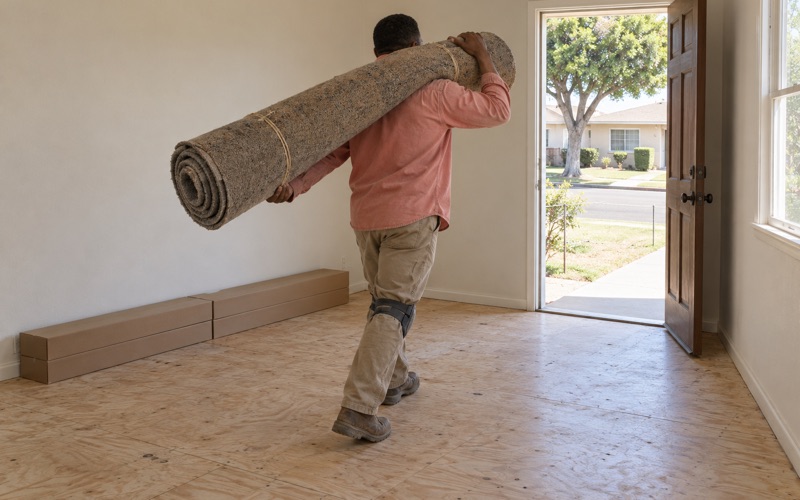
When results come back positive, abatement is handled by a contractor qualified for that work, and our part of the job is scheduled after it. When they come back clear, the report goes into the project file and the old covering comes up under ordinary dust control. Either way, the finish floor is never priced on a guess about what lies beneath.
Lead paint on pre-1978 homes
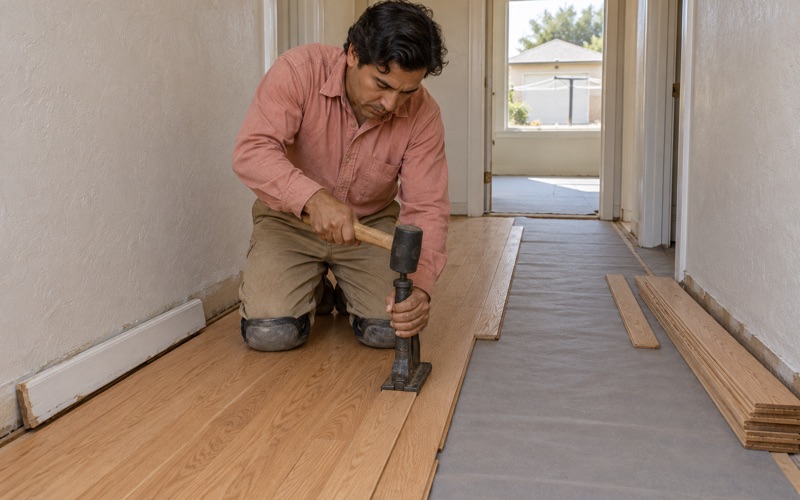
Lead is the second test. Housing built before 1978 is inspected for lead paint and lead hazards under HUD regulations, and the lead requirements apply once disturbed paint passes 2 square feet in an interior room. Pulling baseboard or shoe molding to lift a floor can disturb painted trim, so we plan that step under lead-safe practices and the EPA Renovation, Repair and Painting rule.
Who pays for the testing
The guidelines split these costs in a useful way. Testing is treated as an administrative cost, while abatement counts as a rehabilitation cost the grant may cover. For an owner, that means the sampling step is handled apart from the repair budget, and the results arrive before the scope is final rather than halfway through demolition.
Where Floor Work Falls in the City’s Priority Order
Program money is spent in a set sequence: first the correction of health and safety deficiencies, then code violations and anticipated code violations, then repairs that make a house more supportive of disabled occupants, then energy efficiency work, and finally other eligible general rehabilitation. The Community Development Director may approve up to $10,000 more for health and safety deficiencies.
When a floor becomes a safety question
A floor can move up that list when its condition creates a hazard. A bathroom floor that flexes underfoot, a rotted patch in front of a tub or a buckled kitchen floor that catches a toe is more than a cosmetic complaint, and water feeding into framing gets worse every month it is left. We describe those conditions plainly in our written assessment, with the cause identified, so the city can weigh them against the rest of the house.
When it is general rehabilitation
Worn carpet over a sound subfloor, or dated vinyl in a kitchen that is otherwise dry and level, is more likely to fall under other eligible rehabilitation. That does not remove it from the program, but it does mean electrical, plumbing or window problems may draw on the budget first. On a $25,000 grant, sequence decides a great deal about what gets done.
Accessibility and floor transitions
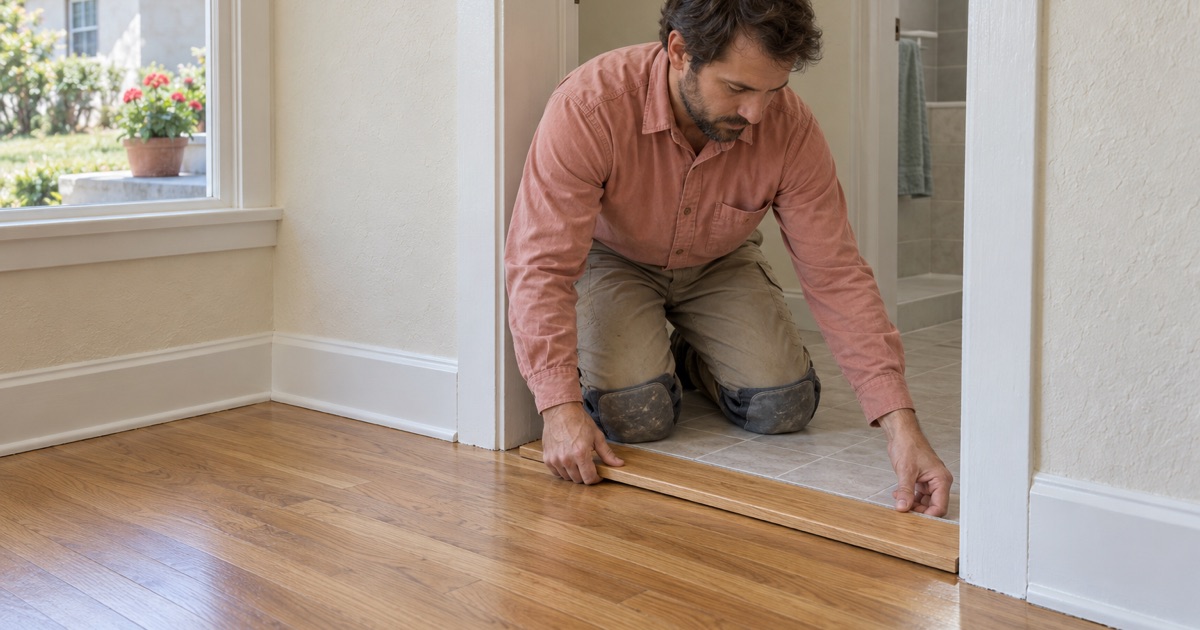
The third tier, repairs that make a house more supportive of disabled occupants, can involve floors as well. A raised threshold between bath and hallway, a reducer strip that has lifted, or a height change where carpet meets tile can all be smoothed with the right transition pieces. We call those details out separately because they are small line items that are easy to miss.
How owners usually hear about the program
Many owners learn of the grant only after a complaint. The guidelines say that when Community Preservation Officers respond to code violation reports, they will inform eligible residents about the program. If a floor problem is part of a code case, it is worth asking about the grant before paying for the repair privately.
Timing matters for another reason. The program allows one grant per property owner every five years, with an exception only for health and safety work. A scope that leaves out a soft subfloor or a known leak can mean living with it for years, so we try to make sure every floor condition is on paper the first time.
Working From the City’s Work Write-Up
The city sets the scope, not the contractor. Before work starts, the project needs environmental clearance from LACDA, and nobody may begin until the city issues a Notice to Proceed. The owner collects at least three informal bids, and every bidder prices the same city work write-up, so the bids can be compared line by line.
How we price against a write-up
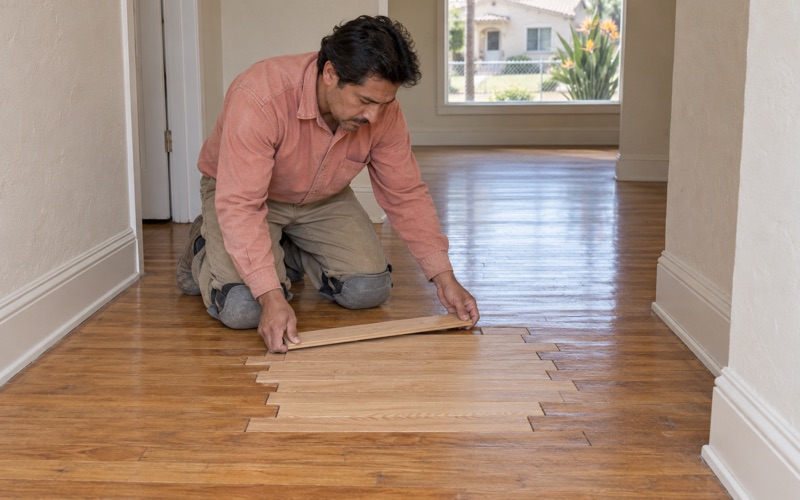
We price what the write-up describes and nothing else. If it calls for replacing a bath floor, our bid separates removal after clearance, subfloor repair to the extent described, underlayment and the finish floor. Anything we find that the write-up missed goes to the owner and the city in writing rather than being folded quietly into the number.
The guidelines also list the insurance, license and federal registration documents the selected contractor must supply before a contract is signed. Owners should ask every bidder for those documents directly and check them against the guidelines. Our written estimate is built to sit beside the other two bids without translation.
Moisture before materials
When a floor is replaced after water or fire damage, new material goes down only after the substrate is dry. We take readings in the wood with a wood moisture meter, and on concrete we use the ASTM F2170 in-situ relative humidity test, recording each number. That record answers the question if an inspector asks why a delivery waited a week.
Finishes, cleanup and the final walk
Where wood is part of the scope, finishes come from products that meet SCAQMD Rule 1113, which holds wood coatings to 275 g/L of VOC in the South Coast basin. A floor that sampled clear still gets dust control during removal. At the end, we walk the finished rooms against the write-up so every line can be checked off before the city’s final inspection.
A small city with one rulebook
Cudahy covers 1.23 square miles and counted 22,811 residents in the 2020 census, giving it one of the highest population densities of any incorporated city in the country. Michael Cudahy began selling the land in 1908 as one-acre lots for vegetable gardens, fruit trees and small coops or stables. After factory closures in the late 1970s, stucco apartment complexes replaced residential tracts, and for the owner-occupied homes that remain, one set of guidelines now governs every grant-funded floor.
- 20+ Years of Wood Flooring
- Written Scopes and Estimates
- Free Estimates