Compton Wood Flooring brings more than 20 years of work to wood-flooring in Bellflower, and a good share of the calls we take start with a letter rather than a scratch. An owner or landlord has a notice in hand that names a floor, and they want to know what repair will actually answer it. That is the job this page describes.
Our approach is simple to state and slower to do. Before we price any finish floor, we find out why the floor failed: a soft spot, a slope, a bounce or a stain is traced down through the subfloor to the framing that carries it. A floor that looks tired and a floor that is coming apart need very different repairs, and the paperwork usually cares about the second kind.
We also write everything down. You get a scope that says what we found, what we plan to replace, and what we measured along the way, with photos and moisture readings attached. That record is yours to hand to whoever is asking questions about the property, and it keeps the repair honest from the first board pulled to the last coat of finish.
How Bellflower Enforces Property Maintenance
Bellflower handles property maintenance through its own city divisions. Two city divisions matter when a floor is part of the conversation, and it helps to know which one you are dealing with before any repair gets scoped. Neither office is something we speak for, but both shape what a sensible repair looks like.
The Code Enforcement Division
The city set up its Code Enforcement Division to promote and enforce compliance with the Bellflower Municipal Code relating to property maintenance and to commercial and residential standards. Its staff monitor development across the city, investigate complaints and conduct inspections. The stated goals include promoting public health, safety and welfare, improving the quality of life in neighborhoods, and educating property and business owners.
The division is paid for through the city’s General Fund and through Community Development Block Grant money. That federal CDBG funding is part of why enforcement reaches into residential blocks, since the city’s CDBG plans list code enforcement in low and moderate income areas among the activities it supports. Anyone who wants to report a violation can reach the division at (562) 804-1424 ext. 2284.
Building & Safety and Substandard Structures
The second office is Bellflower’s Building & Safety Division, a staffed department with a Building Official, a Plans Examiner, permit technicians and a Building Inspector. Beyond plan check, it administers abatement programs for substandard and unsafe structures. Its own page also notes that it requires permits when suspect activities are observed in the field, so questions about paperwork for a given repair belong with that counter.
For a floor, the practical point is that these two offices look at a problem differently than a buyer or a decorator would. They are asking whether a condition is safe and meets a standard, not whether the boards are attractive. We scope a repair with that question in mind from the first visit, because it decides which parts of the floor have to change.
Looking for wood-flooring closer to Huntington Park? See Wood-Flooring in Huntington Park.
When a Worn Floor Becomes a Code Problem
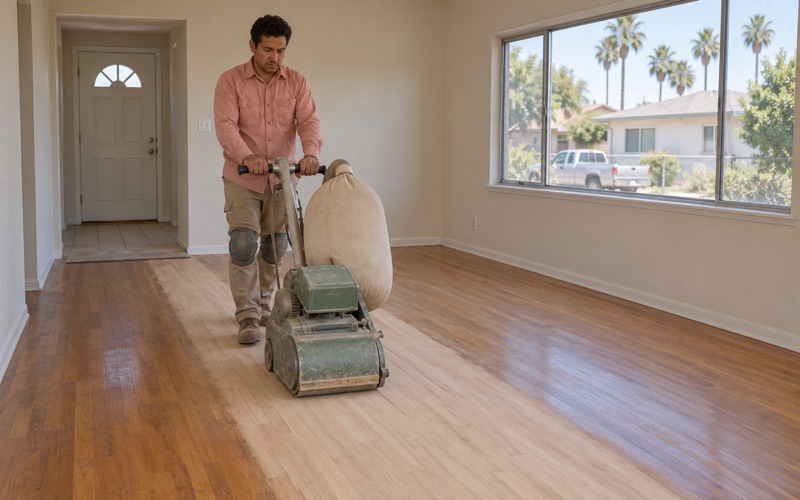
Most floors we see in Bellflower are simply worn: dull finish, gray traffic lanes, a few gaps between boards, some squeaks near a doorway. None of that is usually what a notice is about. The line gets crossed when the floor stops doing its structural job, and state law draws that line in fairly specific terms.
What State Housing Law Calls a Hazard
California Health and Safety Code 17920.3 declares a building substandard when listed conditions endanger the people living in it. Among the structural hazards in subdivision (b) are deteriorated foundations, defective or deteriorated flooring or floor supports, and flooring of insufficient size to carry the loads placed on it. Floor supports are named alongside the floor itself, and that wording matters for every repair we scope.
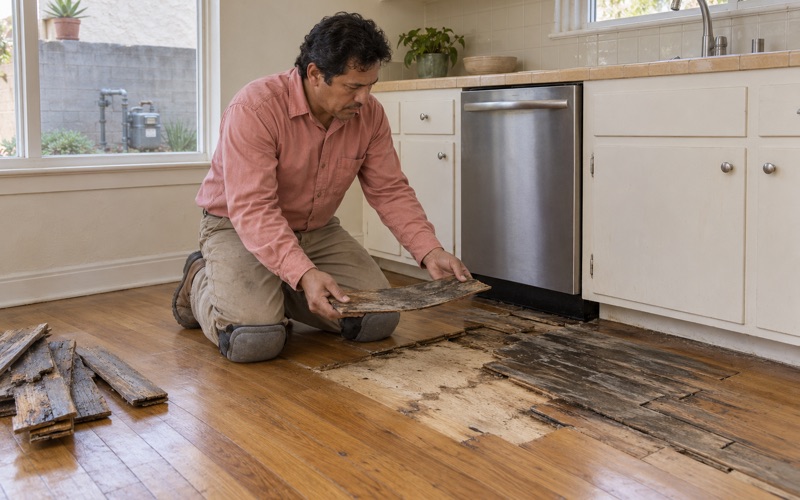
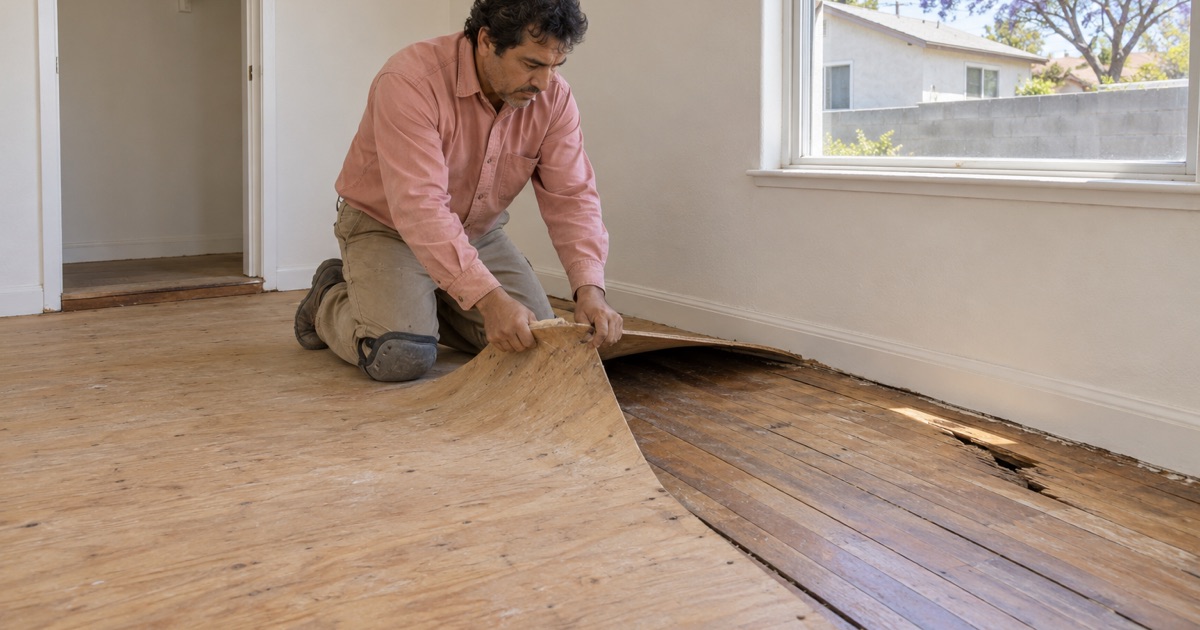
In plain terms, a floor that flexes when you walk across it, a soft area near a tub or toilet, a board that has rotted through, or a section that has dropped away from the joists below can all move a floor out of the worn category. A floor that only needs sanding and new finish almost never belongs in that group, and we will tell you so.
An Older Housing Stock
Bellflower’s housing leans older, which is part of why floor supports come up so often. About 71.4 percent of the city’s housing units were built before 1980, and the single biggest decade was the 1950s, which accounts for 25.5 percent of everything standing. Framing and subfloors from that era have had seventy years to meet plumbing leaks, termites and settlement.
Age also changes how we work. A house built before 1978 gets lead-safe work practices under the EPA Renovation, Repair and Painting rule before anything is sanded, and old 9x9 tile or black mastic under a floor is treated as a possible asbestos question before anyone scrapes it. Those steps protect the people living in the house while the repair is underway.
Renters, Landlords and Who Calls
About 60.7 percent of Bellflower households rent, and half of the city’s renter households live in buildings of five or more units. That means a floor complaint often starts with a tenant and lands on an owner who may never have seen the room. We work for whoever hires us, but the scope we write is plain enough for everyone in that chain to follow.
Fixing the Floor Supports, Not Just the Surface
When a notice cites a floor, the first thing we do is get underneath it. The visible damage is rarely the whole story, and a repair that stops at the surface leaves the cause in place. Our inspection follows the load from the walking surface down to what holds it up, then back again.
Tracing the Cause
A soft spot usually has a source: a leaking supply line, a failed wax ring, a shower pan that stopped shedding water years ago, or insect damage. We take readings with a wood moisture meter in the flooring and the subfloor, and on a concrete slab we can run a calcium chloride test or an ASTM F2170 in-situ relative humidity test. Every reading is written down with the location it came from.
If the source is still active, we say so and hold off on new flooring until it is fixed. Laying fresh boards over a wet subfloor only restarts the clock. When termite frass, kick-out holes or powderpost beetle damage show up, the damaged wood comes out and the finding goes into your file so the right trade can treat the cause.
Joists, Subfloor and Framing
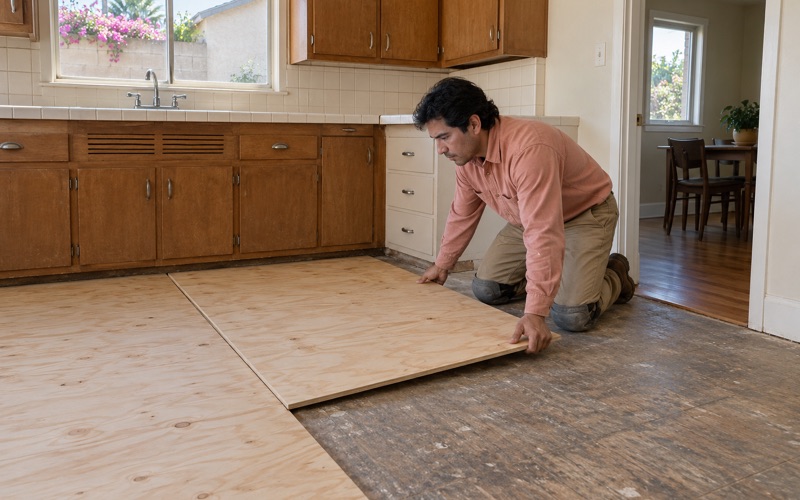
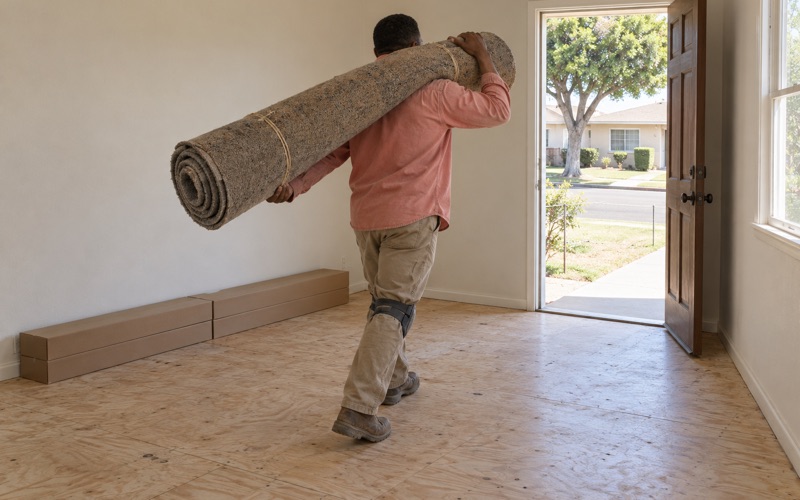
Once we know the extent, we repair from the bottom up. A sagging joist can often be sistered with new lumber fastened alongside it, restoring stiffness without tearing out the whole run. Rotted board subfloor or delaminated plywood subfloor is cut back to sound material and replaced, with blocking added where the new panels meet old framing.
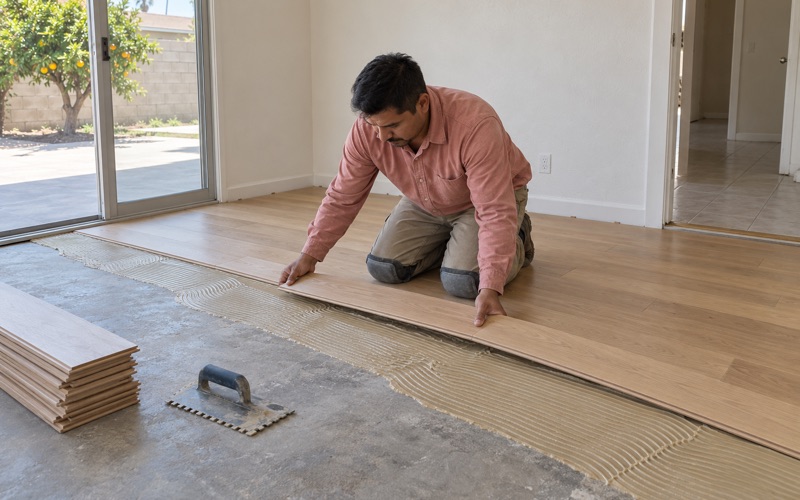
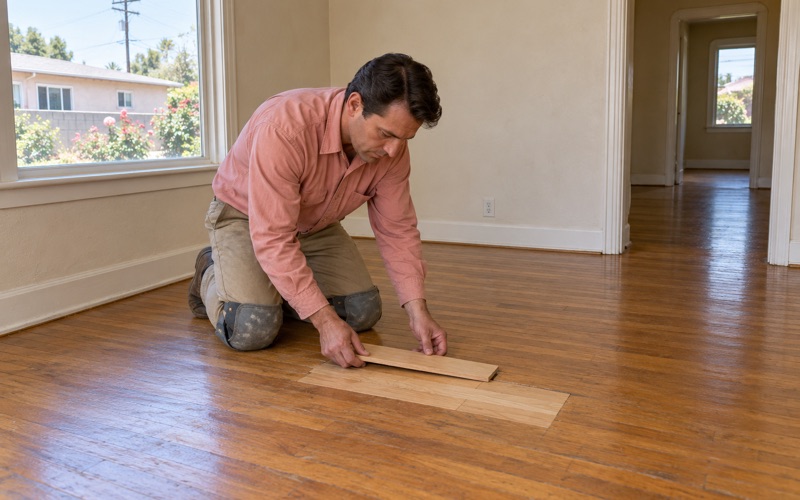
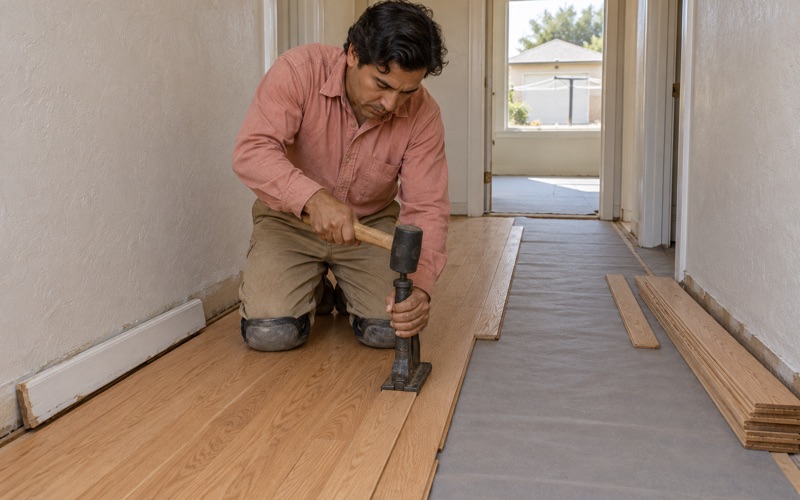
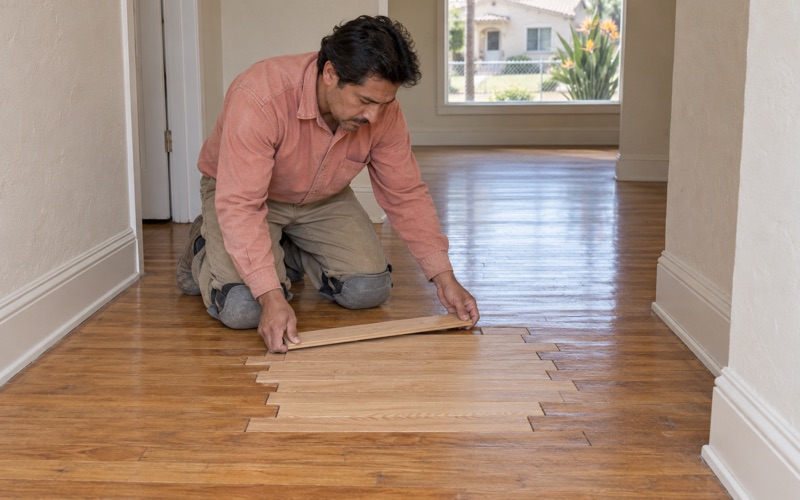
Only after the structure is sound do we talk about the finish floor. Sometimes the original wood can be woven back in with matching boards; sometimes the damaged area is large enough that replacement makes more sense. We follow NWFA installation guidelines for fastening, expansion gaps and acclimation, so the new floor has a stable base and a fair chance of lasting.
Finishes That Fit the Air Basin
Bellflower sits inside the South Coast Air Quality Management District, which limits the solvents in wood coatings under SCAQMD Rule 1113. We choose finishes that are legal to apply here, within the 275 g/L VOC limit for wood coatings, and waterborne polyurethane is often a good match for a repaired room that needs to be back in use quickly.
Scoping a Repair That Answers a Notice
A good scope for a code-related floor repair does two things. It fixes the condition that was cited, and it documents that fix in a way someone else can read without us standing in the room. We build both into the job from the start rather than trying to reconstruct them afterward.
Reading the Notice With You
We start by reading whatever notice or inspection report you received, line by line, and matching each item to what we find on site. If it names a floor in a particular room, we inspect that room first and then check the rooms that share its framing. We cannot close a case or promise how an inspector will rule, but we can make sure our repair addresses what was actually written.
Where a question belongs to the city, we say so and point you to the right office. Permit questions go to Building & Safety, and questions about deadlines or the status of a case go to Code Enforcement. Keeping those lines clear saves owners from assuming that a contractor’s word settles something only the city can decide.
A Written Scope You Can Hand Over
Our written scope lists the cited condition, the cause we traced, the repairs to framing and subfloor, the finish floor work, and the readings we took. Photos show the damage before it was opened, the structure once exposed, and the finished repair. Landlords also get estimates and invoices that work for their own records and for any conversation with a tenant.
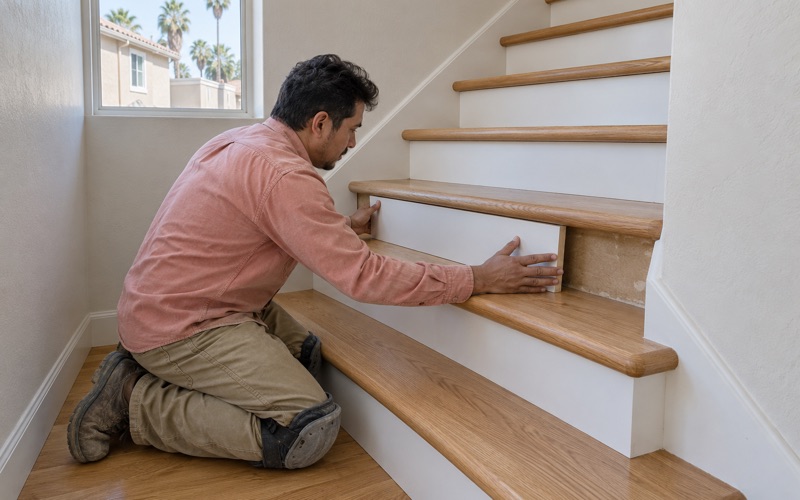
That paperwork is useful beyond one notice. A seller can pass it to a buyer, an owner can keep it with the property file, and a manager can show a new tenant what was done and when. Stairs are priced per tread and riser, so a stair repair tied to a notice shows up as its own clear line.
Why Covering a Bad Floor Does Not Close the Case
The tempting shortcut is to hide the problem: new carpet or a click floor laid across a soft spot, a rug over a hole, a sheet of plywood screwed over a rotted section. It looks finished on the day it goes in. Underneath, the deteriorated floor supports that state law names as a hazard are exactly where they were.
Covered problems also get worse. A leak that rotted the subfloor keeps feeding it, and a sagging joist keeps moving under the new surface until the damage shows through again, usually larger and costlier than before. We would rather open the floor once, repair what carries the load, and put down a finish floor that sits on something sound.
Bellflower has been a city since September 3, 1957, and a fair number of its homes are older than that. Floors in houses like these deserve repairs that deal with the structure honestly. When a notice arrives, we scope the work so the floor underneath is fixed, and we leave you the records to show it.
- 20+ Years of Wood Flooring
- Written Scopes and Estimates
- Free Estimates