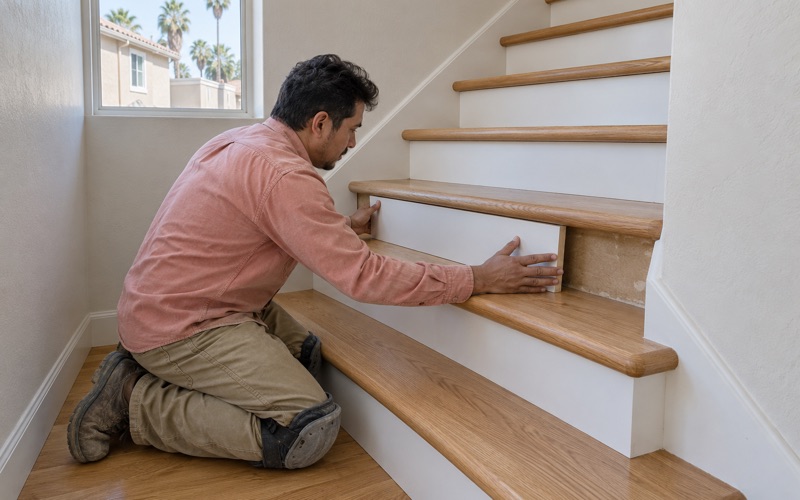
Compton Wood Flooring approaches wood-flooring in Alondra Park as two separate kinds of work, and after more than 20 years on older floors we have learned to ask one question before anything else: who owns the building, and what kind of building is it? The answer changes the species we suggest, the finish we recommend and the way the job is scheduled and written up.
A homeowner living on a floor usually wants to know whether the boards under the carpet can be saved, how long the house will be torn up, and what the finished room will look like for the next couple of decades. An apartment owner asks something different. They want a floor that survives several tenants, can be renewed cheaply between them, and comes with paperwork that holds up later.
Both conversations start the same way, with a walk through the rooms, moisture readings taken before any material is ordered, and a written scope that separates repair from replacement. From there the two jobs part company, and this page explains how each one runs and why we plan them differently rather than quoting every floor off one price sheet.
Two Kinds of Housing in One Community
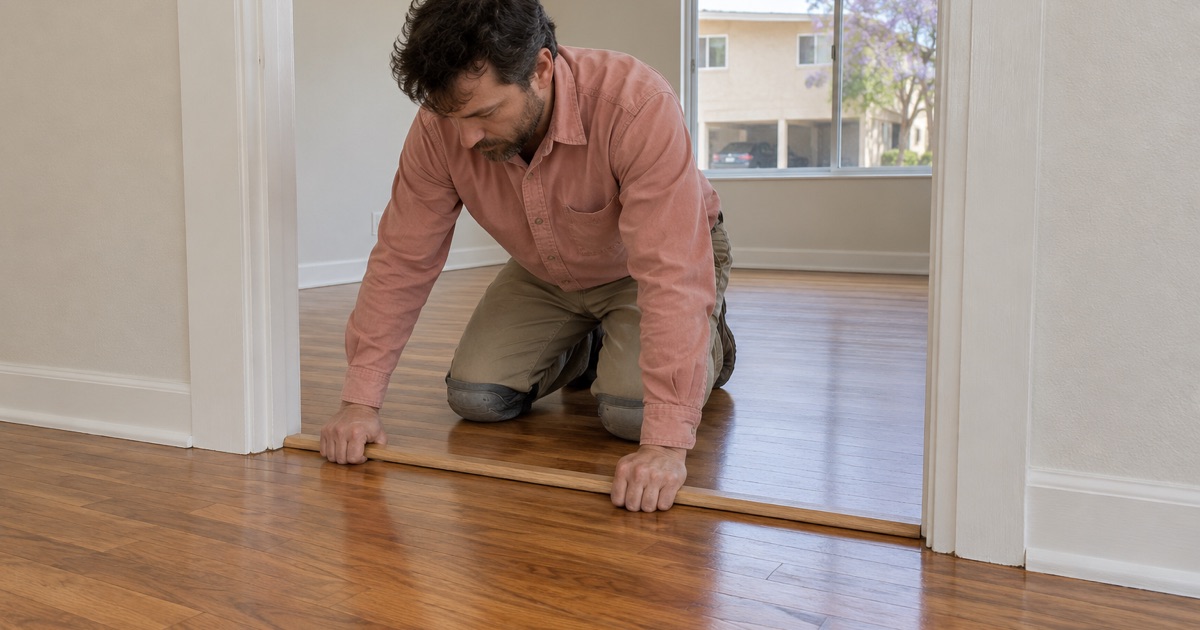
Where the Houses and the Apartments Sit
Los Angeles County’s South Bay Area Plan, published by Regional Planning in September 2024, describes the layout plainly. The bulk of the single-family homes sit in the middle of the community, north of Manhattan Beach Boulevard and south of Marine Avenue. The northern corner is different, with larger parcels and denser multifamily buildings constructed in the post-1950s era.
That pattern is useful to us before we ever see a floor. A call from the center of the community is most likely a single-family house with an owner living in it. A call from the northern corner is more likely an apartment building, where the person on the phone may never have lived in the unit we are about to work in.
What the Census Adds
The American Community Survey’s 2024 five-year estimates line up with the plan. Of 1,484 owner households, 1,394, or 93.9 percent, live in detached houses. On the renter side, 802 of 1,276 households, 62.9 percent, live in buildings of three or more units, including 297 households in buildings of 20 to 49 units.
The two sources do not agree on the exact tenure split, so we do not lean on a single ownership figure. What they do agree on is the shape: owners here overwhelmingly occupy houses, and most renters occupy apartment buildings. For a flooring contractor, that means two distinct customer types with different goals, different budgets and different definitions of a floor that was worth the money.
Looking for wood-flooring closer to Signal Hill? See Signal Hill Wood-Flooring.
The Tract House in the Middle
Wartime and Postwar Construction
The South Bay Area Plan recognizes a significant share of the central homes, particularly those built between 1939 and 1964, as World War II and postwar tract housing. Census counts point the same way. The 1950s were the peak building decade, accounting for 38.5 percent of the community’s 2,858 housing units, and more than four in five units predate 1980.
Tract houses from that period were built quickly and to repeated plans, and after 60 or 70 years each one has taken its own path. Some still carry the floor they were built with under carpet or sheet goods. Others have been patched, overlaid or partly replaced by several owners, each working to a different standard.
What Turns Up Under the Carpet
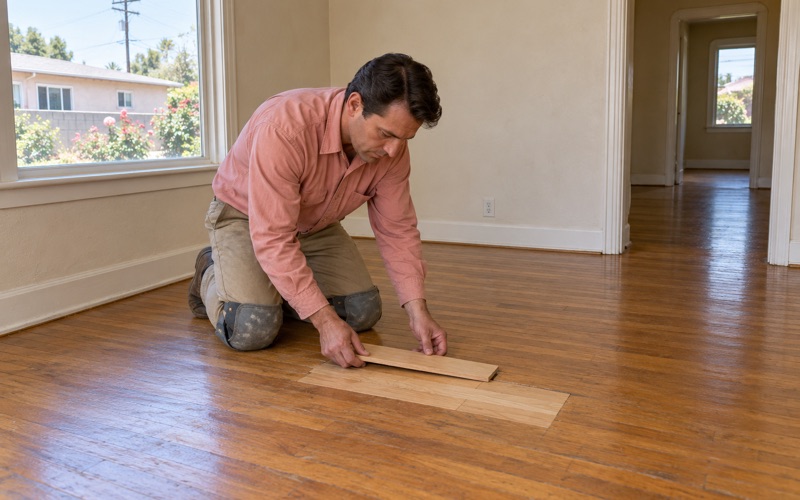
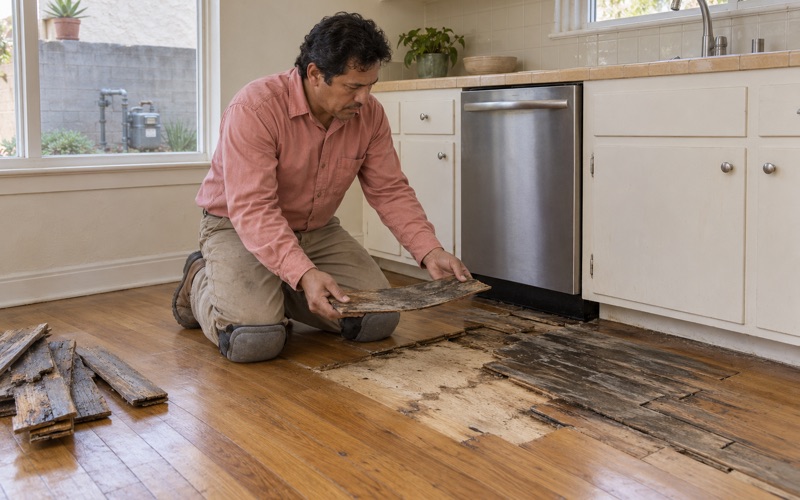
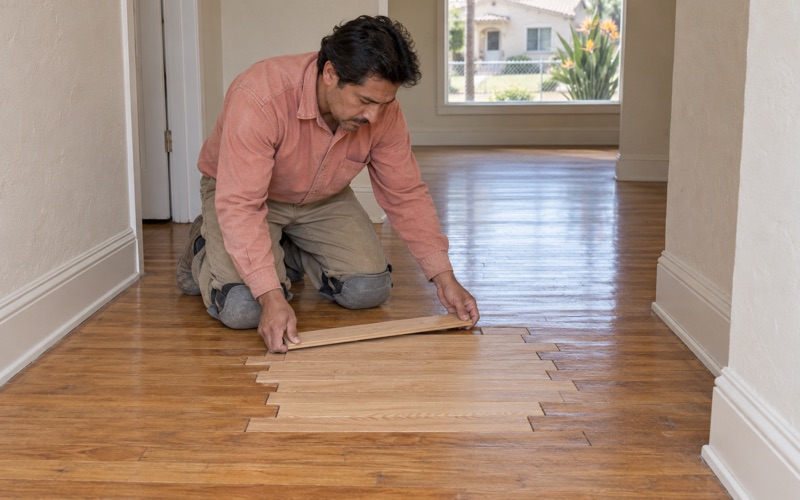
We never assume what is under a covering in one of these houses, and we never quote a full replacement before looking. When carpet, linoleum or paint comes up and wood appears, we assess it board by board. Sound boards with shallow wear can often be sanded and refinished, and a few damaged ones can be replaced with a weave-in repair.
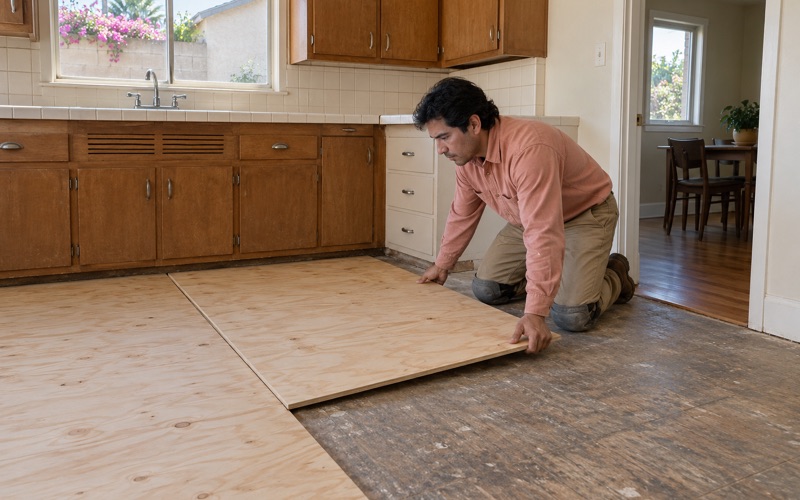
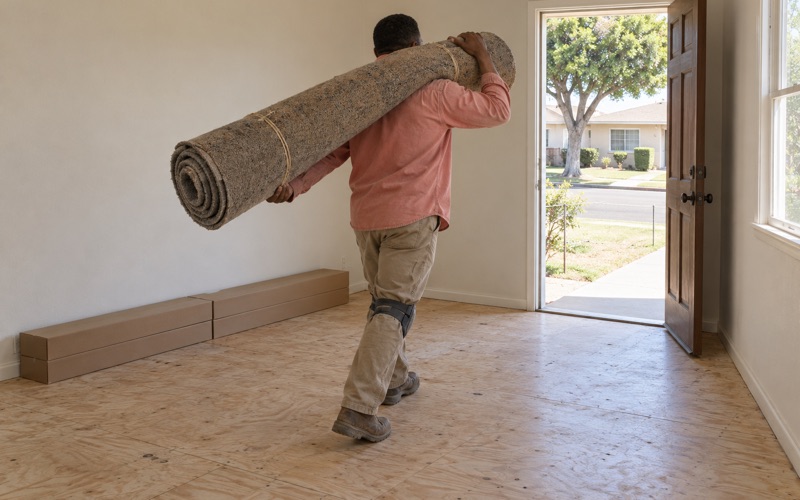
Layers are common. It is not unusual to find wax buildup, adhesive residue or a later sheet of plywood underlayment laid over the original surface. Each layer tells us something about the house’s history, and each one affects whether a floor can be restored in place or whether new material makes more sense for the room.
Framing, Furnaces and Old Finishes
A sloping, bouncy or soft floor is traced to the subfloor and framing before a finish floor is priced. If a sagging joist is the cause, it gets addressed first, often by sistering, so the new or refinished surface is not sitting on a problem. An old floor furnace opening is closed with framing and woven-in boards, never covered with a plywood square.
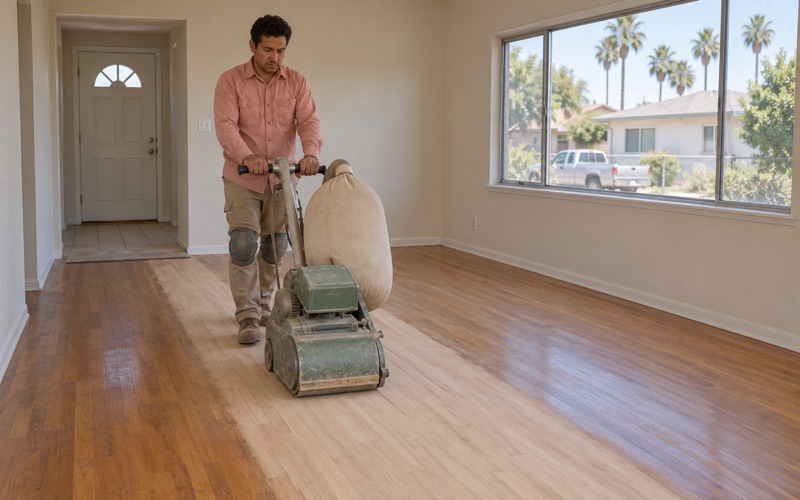
Finish problems are the other half of most tract-house jobs. Orange-toned oak, blotchy stain from an earlier refinish, and peeling or tacky polyurethane all mean a full sanding rather than a recoat. We run a proper grit sequence with a drum sander, edger and orbital sander, and a dustless sanding system keeps the rest of an occupied home livable.
Apartment Buildings in the Northern Corner
A Floor Judged Over Several Tenancies
An apartment owner is rarely buying a floor for how it looks on the first day. They are buying something that has to take move-ins, move-outs, furniture drags and ordinary wear across several tenancies. That shifts our recommendations toward harder species, thicker wear layers and finishes that can be renewed quickly without taking a unit off the market for long.
We compare the Janka hardness rating of red oak, white oak and hickory against the owner’s budget, and for engineered flooring we point first to wear layer thickness. A floor that can take a future sanding keeps its value longer than one that must be torn out once its surface wears through, which matters when the same unit will be turned over again and again.
What an Apartment Owner Plans Differently
Schedules drive these jobs. We work one unit at a time so the rest of the building runs normally, and we time the work to a vacancy whenever possible. In a larger building, hallway and common stair work is staged so every tenant keeps a clear path out, and stairs are priced per tread and riser rather than buried in a square-foot number.
Between tenants, a screen and recoat can refresh a site-finished floor in a day or two, provided the finish has not worn through to bare wood. Satin sheens hide scuffs better than gloss in a rental. We record the exact finish product and sheen on every invoice, so the next recoat matches and the next crew knows what is already on the floor.
Records That Serve the Owner
An owner of a rental building needs paperwork a homeowner may never look at again. Our written estimates and invoices name each unit and room, the square footage, the product and the finish, with labor and material shown separately. That makes them useful at a move-out, when a security deposit is being settled, or before a housing-voucher inspection.
When we open a unit floor and find a leak or a rotted section of subfloor, we trace the damage to its source and document it with photos and moisture readings. That keeps the repair distinct from any upgrade on paper, and it gives an insurance adjuster something concrete to work from if the owner decides to file a claim.
Matching the Job to the Building
Moisture, Lead and Asbestos in Both
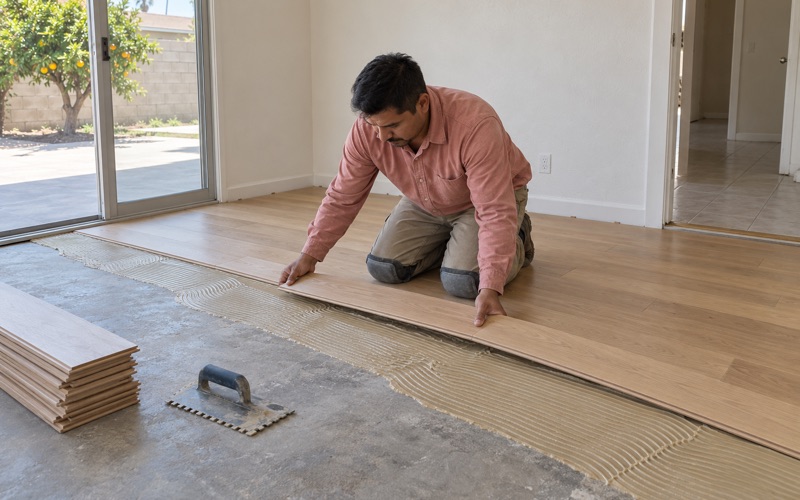
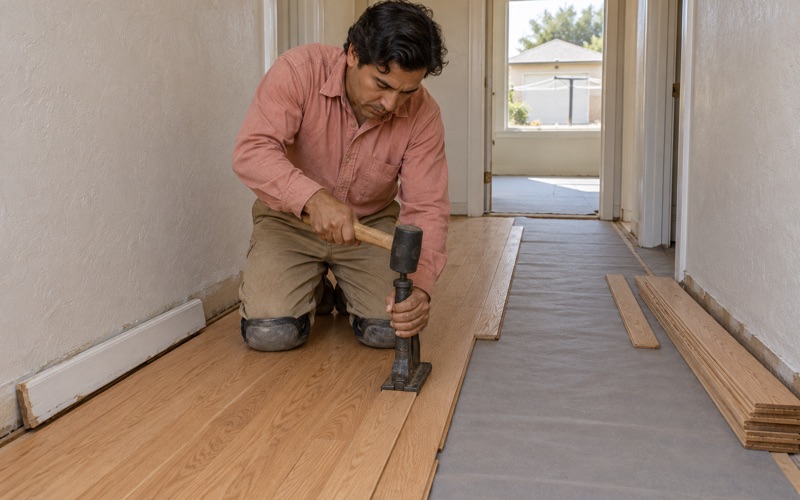
Some steps do not change with ownership. Before material is ordered, we measure moisture content in the existing wood with a wood moisture meter, and wherever a floor sits on concrete we run an ASTM F2170 in-situ relative humidity test or a calcium chloride test. New boards acclimate on site following NWFA installation guidelines, and every reading goes into the written record.
With so much of the housing predating 1980, we plan for pre-1978 construction and follow lead-safe practices under the EPA Renovation, Repair and Painting rule in houses and apartments alike. Old 9x9 tile and black mastic are treated as a possible asbestos question before anything is scraped or sanded, with an asbestos survey first where the materials call for one. Neighbors in a shared building benefit as much as the occupants do.
Finishes Legal in the Air Basin
Every coating we apply is legal in the South Coast air basin under SCAQMD Rule 1113 and its 275 g/L limit for wood coatings. Waterborne polyurethane dries fast and keeps odor down, which suits a rental unit on a tight turnover or a family that cannot leave home for long. An oil-modified polyurethane or a hardwax oil finish fits some owner-occupied rooms better.
The right choice depends on the building more than the product. A tract-house owner restoring a living room may favor a warmer tone and a slower cure. An apartment owner turning a unit in a week usually wants the quickest safe return to service and a finish that can be screened and recoated between tenants without sanding back to bare wood.
A Community of Houses and Buildings
Alondra Park, also known as El Camino Village, is an unincorporated community of about 1.14 square miles between Rosecrans Avenue and Redondo Beach Boulevard, lying north of the 53-acre Alondra Community Regional Park and its golf course. Crenshaw Boulevard is its main commercial corridor, and the Board of Supervisors governs it as part of Los Angeles County.
Those few square miles hold two different housing stories, and we treat them that way. A postwar tract house in the middle of the community gets a job built around saving what can be saved. An apartment building in the northern corner gets a floor planned for years of tenants and paperwork to match, and both start with the same careful look before any quote.
- 20+ Years of Wood Flooring
- Written Scopes and Estimates
- Free Estimates